Sitting in a Circle, Talking about Numbers

“I feel like all we do is sit in a circle and talk about numbers.   It doesn’t even feel like work.”

“This class is more exhausting than my PE class!”

“It’s nice to be confused and then un-confuse ourselves.”

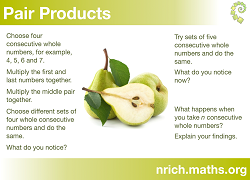
These are words I’ve overheard from my college algebra students this year.  I couldn’t be more pleased with the strides they are making with my problem-solving framework.  I learned the hard way last year that you cannot just throw a problem solving scenario at a student and expect them to immediately persevere, even if they understand the underlying mathematics involved.  Having learned from my mistake, I sequenced the problems this year in a way that has worked to build on their Algebra problem-solving skills.  Furthermore, I’ve put them in groups of 3-4, which has helped tremendously in getting them to talk about their approaches.  Last year, while in pairs, the conversations didn’t occur as naturally as I had hoped.    Here are a few of the problems we’ve tried:

Multiplication Square C thumb (1) thumb


Additionally, we’ve used other Nrich problems such as Odds, Evens, and More Evens.

And to add some non-dairy whipped topping to this algebra awesomeness, my students are breezing through visual patterns and having some great conversations about them.  Credit here is due to their fabulous algebra 2 teachers who began visual patterns with them last year and let them struggle with them.  The result has been deeper connections and a more thorough understanding.


Do You Let Yourself Fail?

I sat down this weekend to do some recreational mathematics with a friend.  Maybe you know him; his name is Justin Aion.  He writes a pretty cool blog over at Re-Learning to Teach.

I made it a goal of mine this year to work on some geometry for a few reasons.  First, I’m not that great at it.  Second, the students at our school historically struggle with it as well.  Two of the problems we chose were from the Five Triangles blog.  And to be completely honest, I sucked.  I sucked a lot.  I sat there for much of the Google Hangout drawing and drawing the figures and then writing down what Justin had eloquently discovered.  And then nodding in agreement. Here are pictures of Justin’s and my respective work:

Bw7xzT5IQAA-A1-0908141738a

Then we decided to work on something I thought was more my cup-o-mathematics tea.  Turning to the Math Forum, we tried this weeks scenario for Trig/Calculus.  How silly of me to assume that since this is just the beginning of the school year, perhaps the task could be solved using Algebra.  Of course Justin busted out the calculus seamlessly and like a pig in numerical-feces, excitedly worked his way to viable solution. (It turns out that applying algebra to this problem was not as straight forward as it might have seemed.) Again, I felt defeated by the mathematics.

The point here is that doing math that’s unfamiliar is hard.   Thinking deeply about problems is hard work.  Applying previous knowledge to a new situation is also taxing.  What I really took away from hours of difficult mathematics was an empathy for the anxiety of many of my students when I ask them to do the same.  It is disingenuous of me to expect my students to persevere through problems if I’m not willing to do the same.  So, I’m committing to being uncomfortable, mathematically, and I will get better.  My geometry skills will improve, and perhaps I’ll be able to revisit my long lost calculus pals, derivative and integral.  The important thing is that I’m willing to try and willing to fail.   In the long run, I think my students will benefit, and I know that I will as a teacher.

The Anti-Answer-Getter

I must start off today saying that I have never experienced such a fantastic start to the school year than I have this year.  The energy within our department is almost palpable, and I know that the students are catching on as well.  Here’s an email I got from one of my co-workers this morning:Untitled

I want to give credit to Teresa and Dianna because they were more of the driving force behind encouraging the use of Plickers.  I’m thrilled with the result nonetheless.

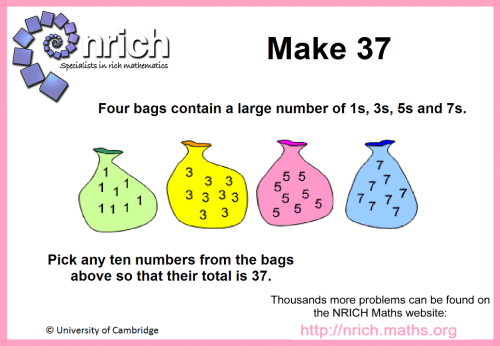
The group that impressed me the most today was my first hour, math recovery.  These are kids who have previously failed a math class and are recovering credit.  You can imagine the lack of math love in the room.  Here was their prompt:

Make 37 1885 C


SPOILER ALERT:  I’m going to reveal the answer so if you’d like to try it for yourself, stop reading.

I had them come up with ways they could make 37 using different amounts of numbers.  It seemed that we could get 36 using 10 numbers or 38 using 10 numbers but couldn’t quite get 37.  Then we tried getting 37 using 9 numbers or 7 numbers.  We had some good discussion about which strategy seemed the most useful.

One student in particular mentioned that he wanted to add some and subtract some but he felt he would always be short without a 2.  I had them share their results on the board and I was very satisfied with the effort I’d seen.

I was nervous about the answer reveal because as it turns out, it’s impossible to make 37 with 10 numbers.  What we were able to do is focus our attention on what we DID discover, rather than the fact that there was no answer.  We discovered that Odd + Odd = Even, Even + Even = Even, and Even + Odd = Odd.  Because there is an even number of odd numbers, an odd sum is not possible.  I was more pleased with this result than any single answer they could have given me.  I expected a backlash from a group of students used to answer-getting but found that they were able to embrace a learning activity that didn’t one final answer.  I’ll mark that class period in the win category.

Talky, Talky, Talky. No More Talky.

Because I’m hyper-interested in helping to create a space where kids feel comfortable sharing ideas and making mistakes, I began my classes today with the Talking Points activity that Elizabeth Statmore (@cheesemonkeysf) shared at Twitter Math Camp this past summer.  Learning that a tight rule of No Comment was a cornerstone of the activity intrigued me to try it in my classroom.  Productive conversations in math class don’t happen automatically very often.  I’m hoping that using this process helps students to use exploratory talk around mathematics.

The No Comment was difficult for students, but I realized quickly, it was difficult for me as well.  For example, when debriefing with the whole class, I was tempted to comment…after each group presented.  I had to tell myself each time a group gave a summary that there wasn’t a need for my comment.  I was tempted to clarify thinking or give a follow up explanation.   I needed to let the groups own their experience.

This realization made me cognizant of the other times a comment by me is unnecessary following a student response.   How many times have I insisted on having the last word in the class?  How many times have I summarized a student’s thinking for him or her?  Hopefully, as students move toward being more exploratory with their discussions, I can move toward being less dominant in the conversation.

Facing Fear

It’s always fascinating to me to watch students step into a new classroom and immediately search for their social comfort zone.  Students aren’t unique in this phenomenon; they are just the group of humans in which I interact the most.  Today being the first day of school, the visible and invisible social boundaries that students draw between one another were clear as I silently observed.

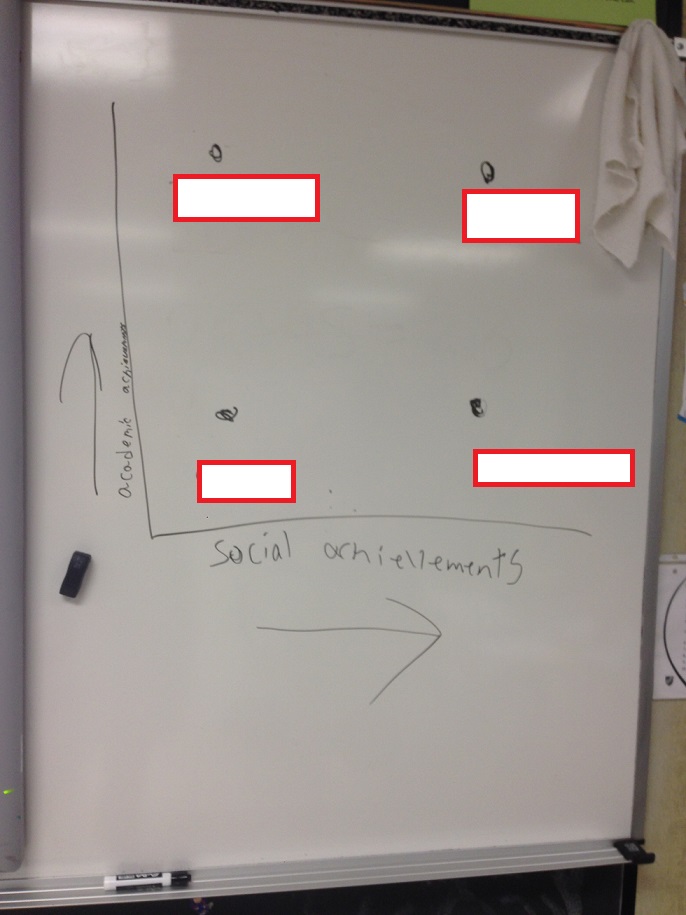
As someone who struggled fitting into a unique social group growing up, I’m most interested in encouraging kids to break away from their cliques. After reading much of what Ilana Horn has written on the subject, I also began to see links between being socially extroverted and status in the mathematics classroom.  For example, kids who are quiet and mostly keep to themselves don’t often have opportunities to display their “smartness,” whereas an outgoing kid willing to contribute voluntarily to class discussion would have their “smartness showcased regularly.  Interestingly enough, when doing the “personality coordinates” activity with my college algebra class today, one group created this graph:  IMG_6508

They defined social achievements as number of friends and academic achievements as GPA.  It allowed us to have a nice discussion about grades and overall intelligence as well as some lovely talk regarding different definitions of social achievement. I look forward to continuing these conversations over the course of the trimester and challenging them to let their popularity guards down.

On a similar note, I tried the Blanket Challenge in my Algebra 2 class.  If you have not read this chapter in Powerful Problem Solving, I’m not sure why you are still sitting here.  Go read it! What impressed me with this group of kids, was they were willing to step out of physical comfort in order to achieve the result they wanted.  IMG_6505 IMG_6506

On the first day of school, in a class that’s tough to adjust to, I can’t begin to express how proud I am of this group of kids for their willingness to work together respectfully and successfully.  I’m hoping to build on the results from this activity in the days to come.

Torch Relays

Two 12-hr work days down, 5 days until school officially starts. (Cliche about how there’s never enough time). I’m optimistic about this year, but I can’t remember a school year that I didn’t have a positive outlook. (Incurable, I’m told).
Yes, this summer, I attended Twitter Math Camp, and there’s a lot of residual glow that transfers easily to energy toward my classroom. But what’s really got me charged this year is watching my two co-workers, who joined me at TMC, prepare for the school year by igniting the rest of our department with the torch they’ve had burning since we got back from Jenks. These two awesome women (@tootalltrees and @d_Hazelton) have courageously engaged the other math teachers at the highschool in important conversations about how students learn mathematics best. And it’s catching on. Hopefully like wildfire.
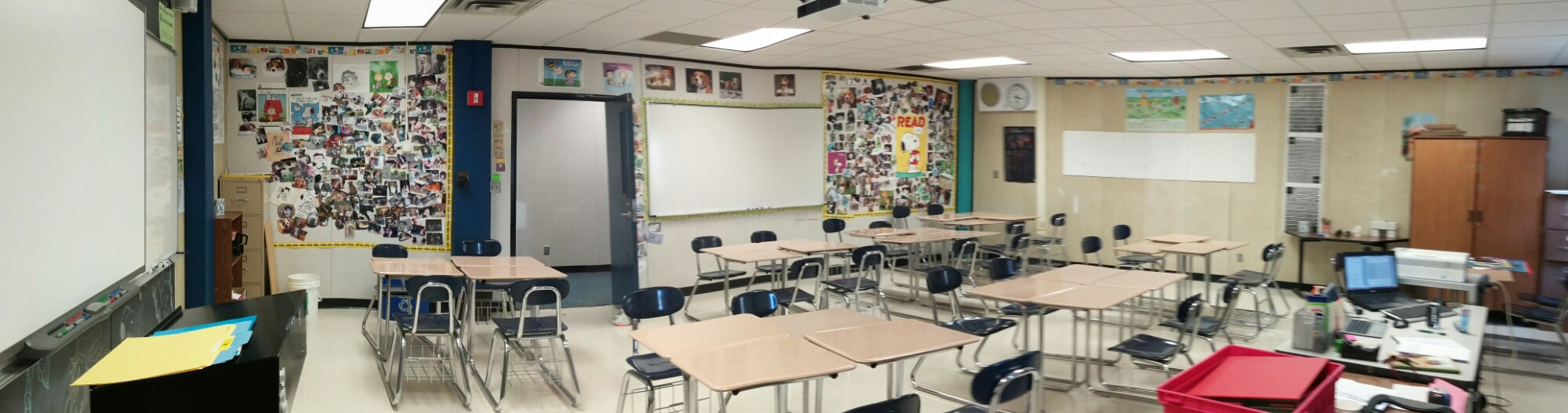
I put my desks in groups of 4 today and took a neat panoramic picture with my new phone. I’m excited to see if it’s a successful, productive room arrangement.

image

Algebraic Anguish

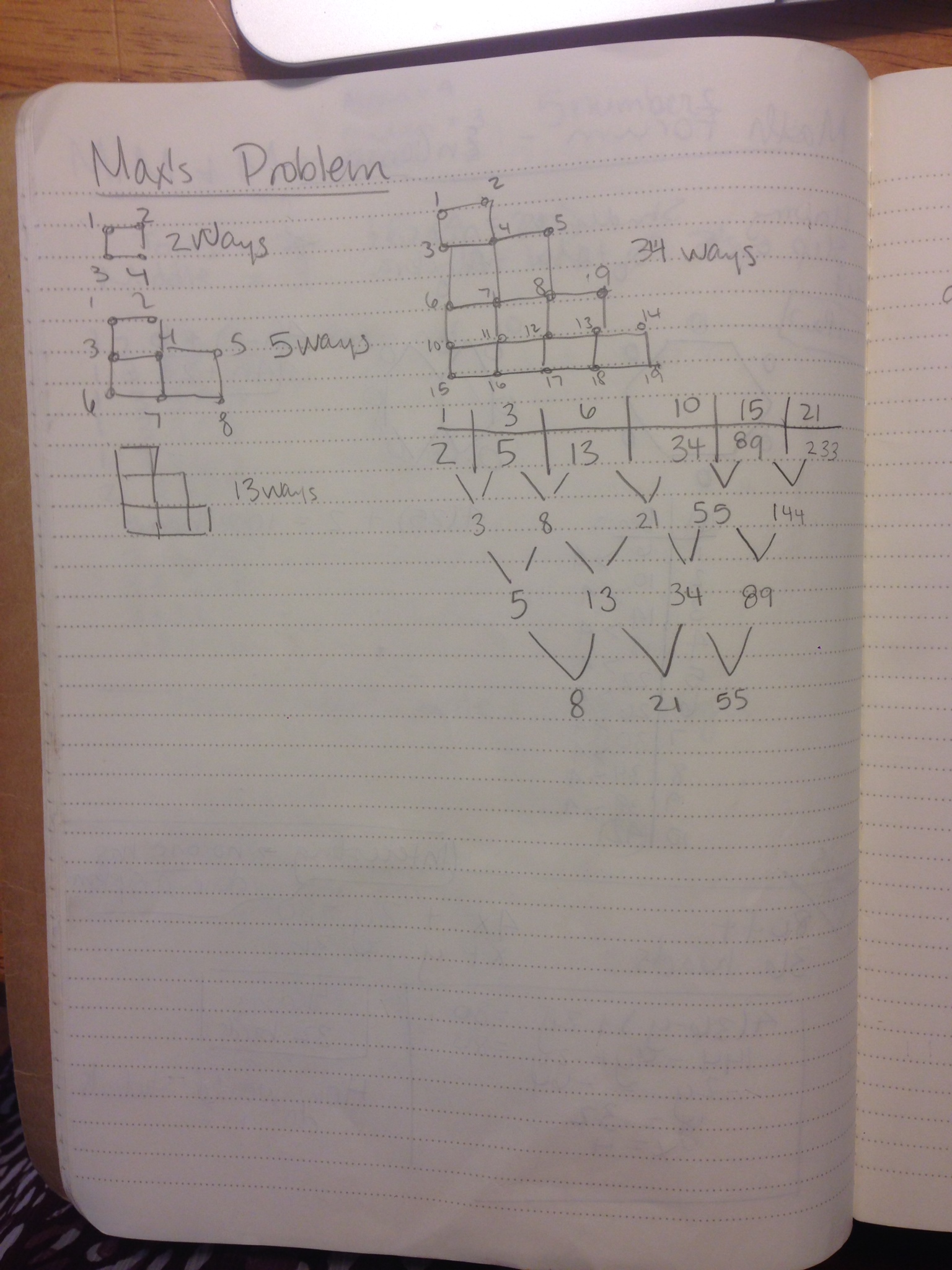
The following prompt presented at Twitter Math Camp by the Mighty  Max Math Forum (aka Max Ray) has been rattling around in my brain for the last few weeks.  Here a grid representing streets in Ursala’s town:

IMG_4814

The problem-solving session, masterfully orchestrated by Max, allowed each group of teachers to develop their own representation of the situation and think about what questions could be asked. For example, if Ursala is at point 1 and needs to get to point 19 along the line segments, without backtracking, how many ways are there for her to travel?  Lots of discussion ensued at our table including the definition of backtracking.

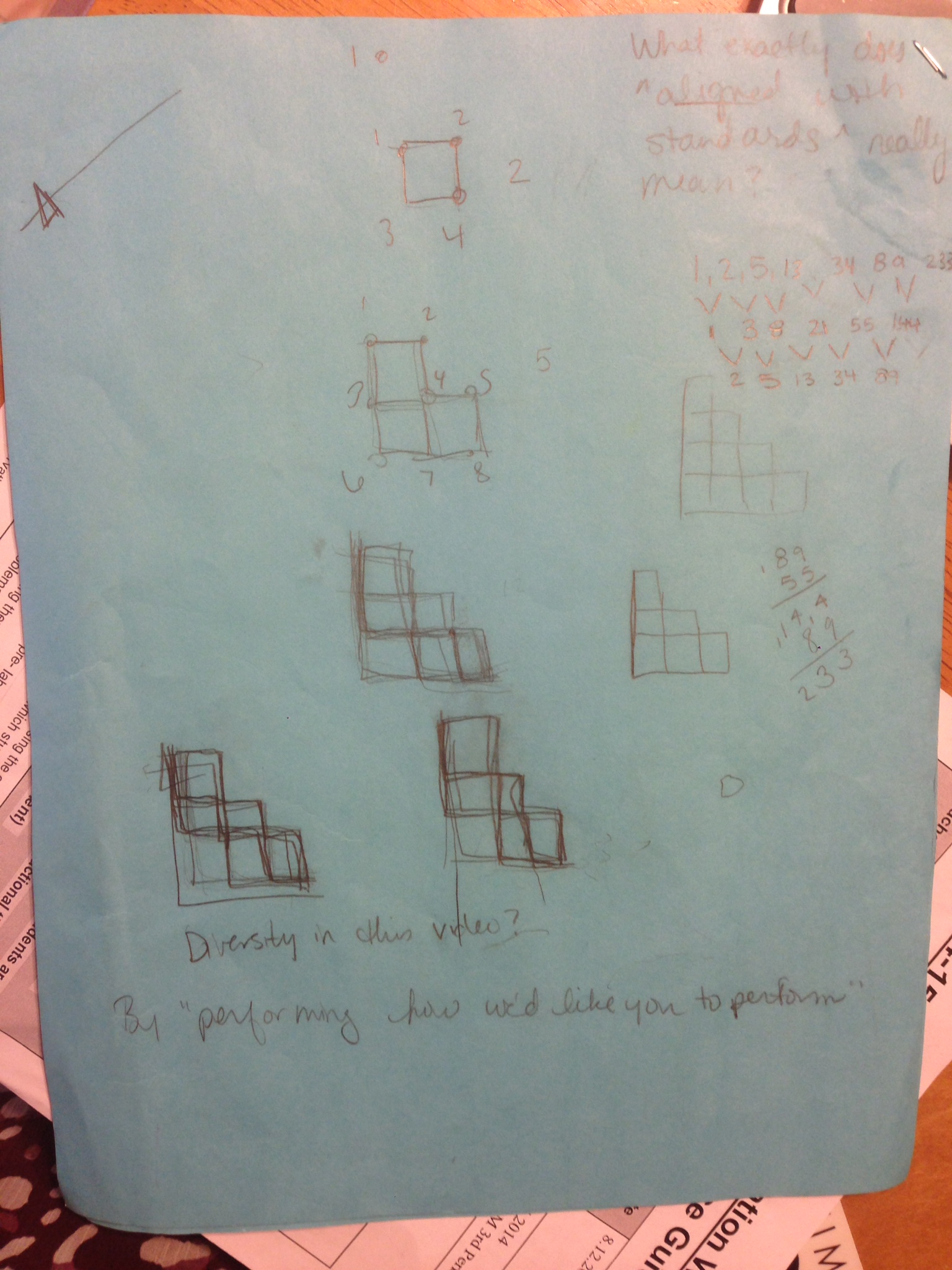
I’ve been at school the last few days and anyone who has sat near me at a meeting in the last few weeks has seen me doodle this scenario, I’m sure wondering what my nerdy math-brain was concocting:

IMG_4816IMG_4815IMG_4817


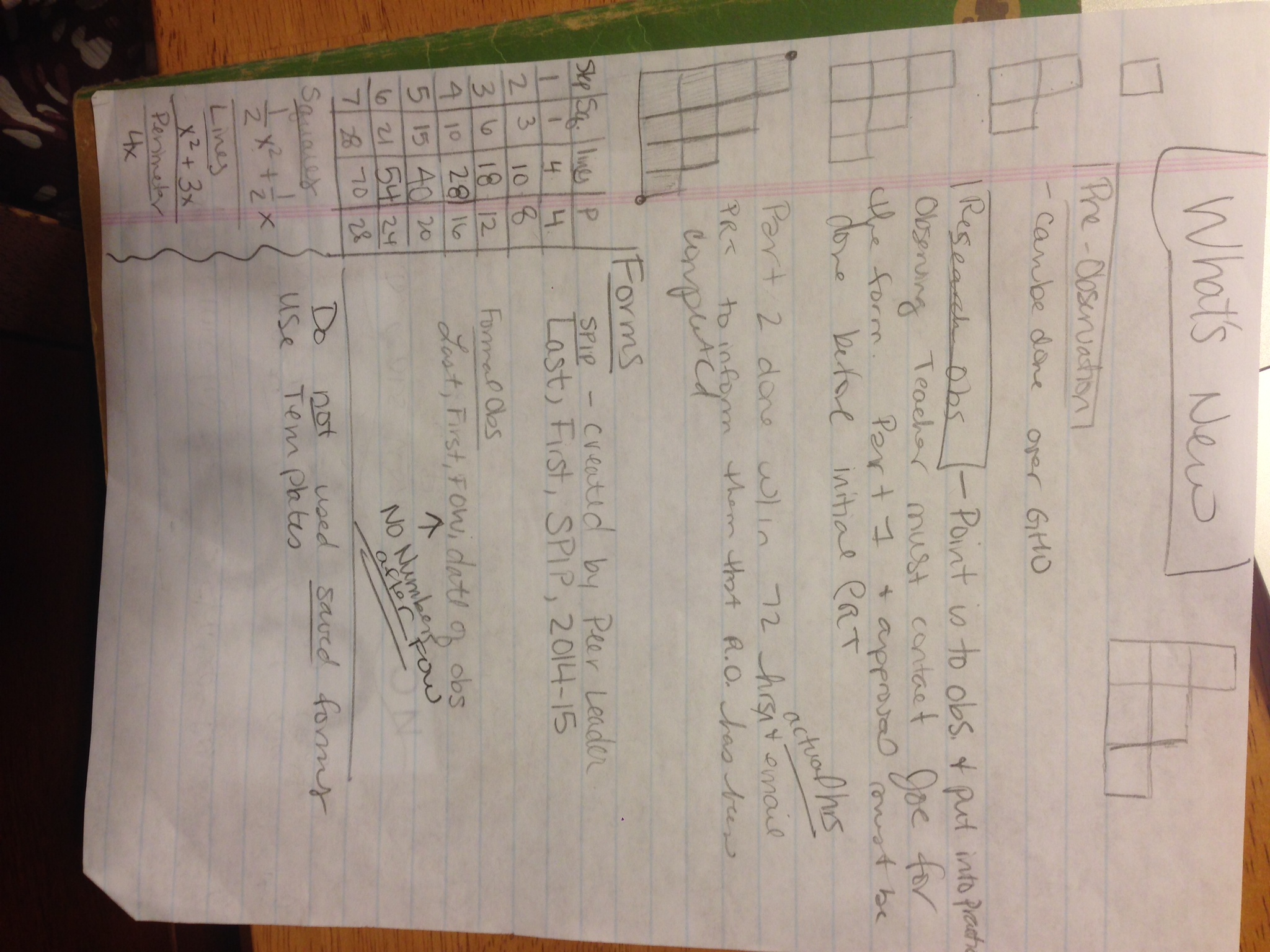
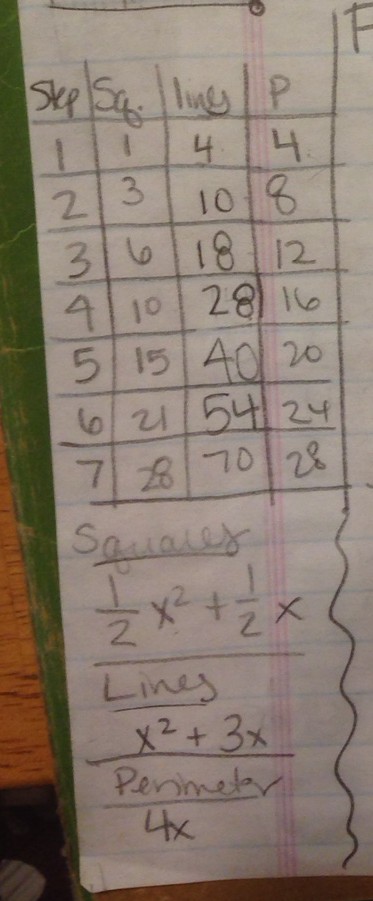
Simplifying the grid and turning it into a pattern expanded the questions that I wanted to ask.  For instance, how many line segments (or streets) in Ursala’s case) are used in step n?

IMG_4817


What I’m still grappling with is how to expand my wonder about this scenario past the algebraic representations.  In talking with other teachers recently, it seems as though many of us have been programmed to solve these, and many other problems algebraically.  I recognize that many students won’t reach for the algebraic aid.  So my next step is to try to see this situation in other ways, sans algebra to better understand how my students are likely to see it.


The Power of a Network

I joined twitter in 2008 and started tweeting more actively in 2009.  Thanks to my attempt at Justin Aion’s Twordle experiment, I was reminded that my first tweets were annoyed snark toward the women of the View.  They never responded.  Shocking.

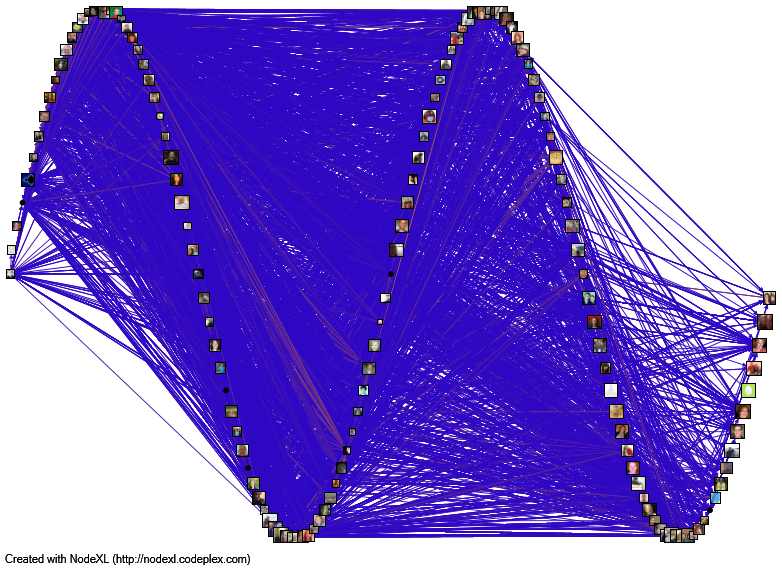
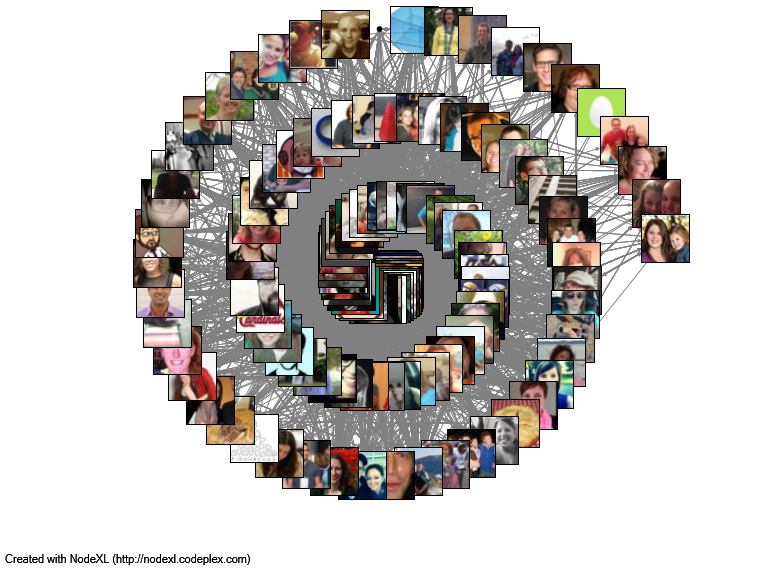
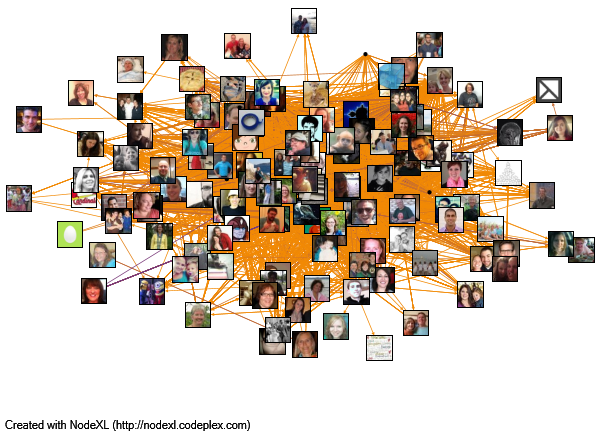
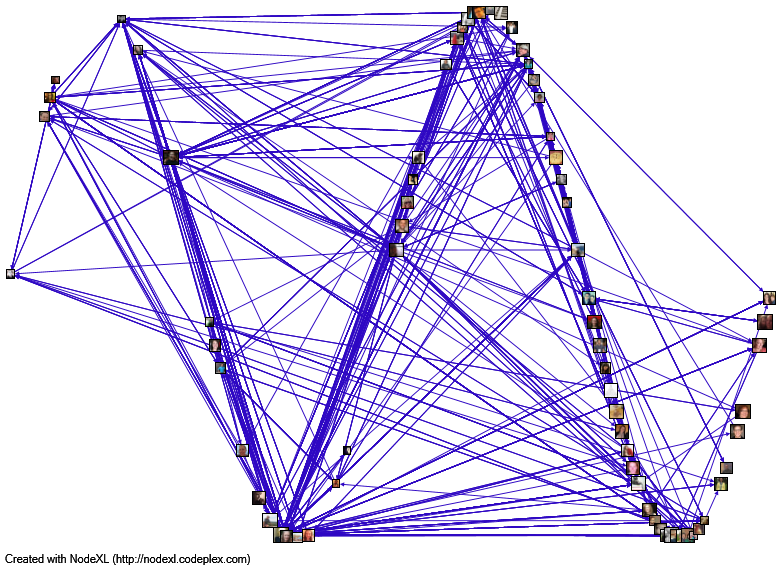
Five years later, my twitter usage has evolved into something that has helped transform my teaching.  Attending Twitter Math Camp last week provided some proverbial icing on the cake.   Glenn Waddell reiterated that Twitter Math Camp is 150 teachers who all believe they can change the world.  It’s hard to capture the magnitude of this incredible event and hard to explain in words how much positive impact these “friends in our phones” can have on the actual students in our classes.   I thought perhaps a picture could capture it. Over the last few days, I attempted to capture the essence of this twitter network.  I wanted to visually represent the inter-connectedness and strength of a group of math educators who feel that by interacting in person for four days in the summer, they’ll have the power to make their students’ world better.


sinecolor

#TMC14 Twitter interactions from May to July. (in a sine wave)

spiralmentions

Twitter mentions in a spiral

Random Interconnections

Random Interconnections

tweetssinceTMC


This last graphic is the most powerful to me.  These are the twitter interactions among the TMC14 participants SINCE the event.  Have you ever gone to professional development where you kept interacting with so many people from the conference?  Me neither.  There’s a ton more that I want to do with this network software, but I’ve poured over it for days, and I wanted to share what I had so far.

There were 36 teachers at TMC12, 110 at TMC13 and 150 at TMC14.  I know that these networks spread far beyond the attendees in Jenks, Oklahoma last weekend.  But a strong foundation has been built. It’s an unspoken commitment to one another that says, “when standards-based grading (or interactive notebooks, or problem-based instruction, or group communication) isn’t going as well as you’d hoped, I’ll be there to get you back on track.”  It’s a network of teacher’s across the country that come together over mathematics, but truly bond over their inherent desire to help all students succeed.  And it’s open to anyone who has the desire to be one of the connecting threads.

Thanks, Jenks

When you build up a future experience in your mind, it is not often BETTER than how you envisioned it.  Twitter Math Camp was that experience for me.  It was so much better than it looked on a hashtag.

In 2008, I began my twitter journey.  I mostly followed celebrities and friends.  My brother swore that twitter’s true gold was in following real people that have similar interests and ideas.  As it turns out, he was right.  Since jumping head first into the Mathtwitterblogosphere, I’ve experienced nothing but a genuine willingness to help one another become better educators.  TMC solidified my understanding of this network of delightful people that make up the math-educator-online community.

Recently, twitter was abuzz over the thought that TMC should be more theory, less play.  Part of the beauty of this experience was the organic nature in which everyone gathered and collaborated.  At professional conferences, you never see groups of teachers still talking pedagogy at 6pm, still at 8pm, and at midnight, and still at 2am. This went on for FOUR solid days.  Can you imagine this happening at school:  students staying after school into the night to work on the math investigation that they can’t stop talking about?  It doesn’t happen.  But anyone who’s been a summer camp counselor knows that there’s always that group of kids that can’t get enough interaction with their peers and choose to forgo sleep to soak it all in.  That’s why the C in TMC stands for CAMP and not Conference.

Some highlights for me: 

  • Justin Aion is the same ball-of-fun in person that he seems online.  I’m grateful for getting to spend time with him.
  • Max Ray is an artist at facilitating problem-solving.  His session was masterfully orchestrated.
  • Steve Leinwand is a humble communicator but an electrifying presenter.  I was moved by his keynote very much.
  • Malke and Christopher’s willingness to teach Math in Your Feet afterhours was generously spectacular. I was skeptical at first about my ability to engage, but I’m so thankful that I was pushed to do so.
  • Bob Lochel knows more stats activities than pages in a textbook.  I enjoyed working with him in the morning sessions very much.
  • Glenn Waddell is an amazing human being.  I’m humbled to have gotten to steal some of his attention this weekend.
  • Eli Luberoff is a humble genius and a class act.
  • I have the two greatest coworker friends, Teresa and Dianna, who came with me to Jenks and dove head first into the awesomeness of this community.

IMG_6268IMG_6241IMG_6238

I had hundreds of interactions with some fantastic people.  This isn’t something that can be re-created online, despite the fact that the community began there.  Thank you, Jenks, for hosting such an incredible event.


Confession: I’ve never really been good at math

Here’s a confession of mine:  I’ve never really thought of myself as ‘good at math.’  Yep, I’m a high school math teacher proclaiming my discontent with my mathematical abilities.  Ironic?  Sad?  Make you want to hide your children?  Read on, it’s not as bad as you think.

Being a math teacher was a second career for me, as my undergraduate degree is in accounting.  I dabbled in a minor in mathematics while at the University of Iowa but let a ‘C’ in Linear Algebra from a cold professor change my trajectory for the next 4 years.   When I went to graduate school to earn my masters in Mathematics Education, I was always intimidated by the math undergrads who were much more polished and current on mathematical theory.  Recently I came across this article which shed some light onto what often happens with girls in areas like mathematics. In short, women tend to give up on themselves more quickly because of their strong inner voice.   I know that I was never discouraged from pursuing difficult challenges by my parents, especially academically.  I came from a family that was very supportive of my education.  It was my own inner-voice telling me that I wasn’t as good at pure mathematics, which was the lingering after effect of that C grade.

Recently, Rafranz Davis wrote a blog post about the transformation of twitter admiration into palatable inspiration.   This post was timely for me since as summer conference season reaches its peak, I’ll be attending Twitter Math Camp starting on Thursday with dozens of other math tweeps with whom I’ve admired and been inspired by.  These positive interactions have projected me to a place where I’m comfortable with my mathematical abilities and completely humbled by my ability to participate with such a wonderful group of educators across social media.