Listening and Learning from Educators of Color

About a month ago, Christopher Danielson offered up a challenge to white educators to listen more and talk less. Specifically, we should be listening often to students/teachers/people of color and the privilege of being a white american that they do not have the opportunity to enjoy.   I took Danielson’s advice and began to really listen intently to these voices.  This blog post is how my listening will impact my teaching practice.

My family upbringing did not include overt racism, and my parents instilled values that included kindness to all.    I was confident growing up (and still am today) that my father worked very hard in order to financially secure his family.  His beginnings weren’t humble, as most would define the term, but coming from a family with 4 children, earning a C average in high school and attending the only college that would accept him weren’t great indicators of the kind of financial well-being that he has achieved.  My mother grew up in a household which included an alcoholic father and a co-dependant mother.   Her resilience allowed her to escape the dysfunction of her upbringing and earn a college degree. So my conclusion was: My family isn’t racist, my parents worked hard to get where they are in life, so anyone (white or black) should be able to do the same.  If they don’t, the problem must be individual.  After all, not all white people discriminate against black people.  

Then I began to listen.  And with that listening came a fuller understanding and acknowledgement of my white privilege and the institutional racism that still affects people of color today.  For example, I listened to Jose Vilson, whose book This is Not a Test explores the effect that race has on school and teacher quality.  His personal narrative allowed me to fully immerse myself into the issues of equality (or lack there of) that plague our inner-city schools.

I listened to Melinda D. Anderson whose unapologetic, relentless support for students and educators of color opened my eyes to how racism is treated as a thing of the past in our country but is a present day dilemma for people of color.   Her voice has helped me to recognize that black students disproportionately attend high poverty schools making segregation a 2014 issue, not a 1954 one.

I listened to Ta-Nehisi Coates whose monumental article The Case for Reparations challenged me to recognize that black americans may have equal opportunities in our country, but their access to those opportunities is anything but equal.  I listened to an hour long interview he did with Vox and one of the most powerful messages I received was this:  Our country had a 250-year policy of slavery plus another 100 years of downright discriminatory, racist laws.  We’ve spent the last 50 years trying to repair it, with many policy makers still not acknowledging that there was anything to repair in the first place.  So Coates asks, if a country spends 350 years seriously mistreating a particular culture and then 50 years sort of trying to fix it, where would you expect that culture to be socio-economically?

I also listened to this:  “Sixty-Three percent of Americans believe ‘blacks who can’t get ahead are mostly responsible for their own condition.'” And for the first time in my life I profoundly disagreed with that statement.  The very idea that blacks ‘who can’t get ahead’ would choose irresponsibility purposefully, over and over again, doesn’t make sense to me.  There are many reasons I find this belief held by a majority of Americans to be lunacy, but one in particular that is close to my heart is education.  As George Washington Carver stated, “Education is the key to unlock the golden door of freedom.”  How do we expect black students to earn that key to freedom when inequality continues to play a key role in schooling opportunities?   Is education a great equalizer when blacks are wildly disproportionately educated in schools that don’t measure up?

And I continue to listen.  The National Association for Multicultural Education published interviews with teachers of color which help white teachers like me “work more effectively and respectfully” with students of color:

  1. Listen to teachers of color
  2. Examine white privilege
  3. Be honest about your knowledge of a culture
  4. Clarify your purpose for teaching
  5. Challenge your students rather than pity them
  6. Be resilient

(Multicultural Perspectives 9(1), 3-9, 2007)

I want to continue to listen because by listening so far, I have been able to learn.  As a white person, I do not experience judgements based on my race, which is why it is so vital that I keep listening to those who do.


Crafty Math

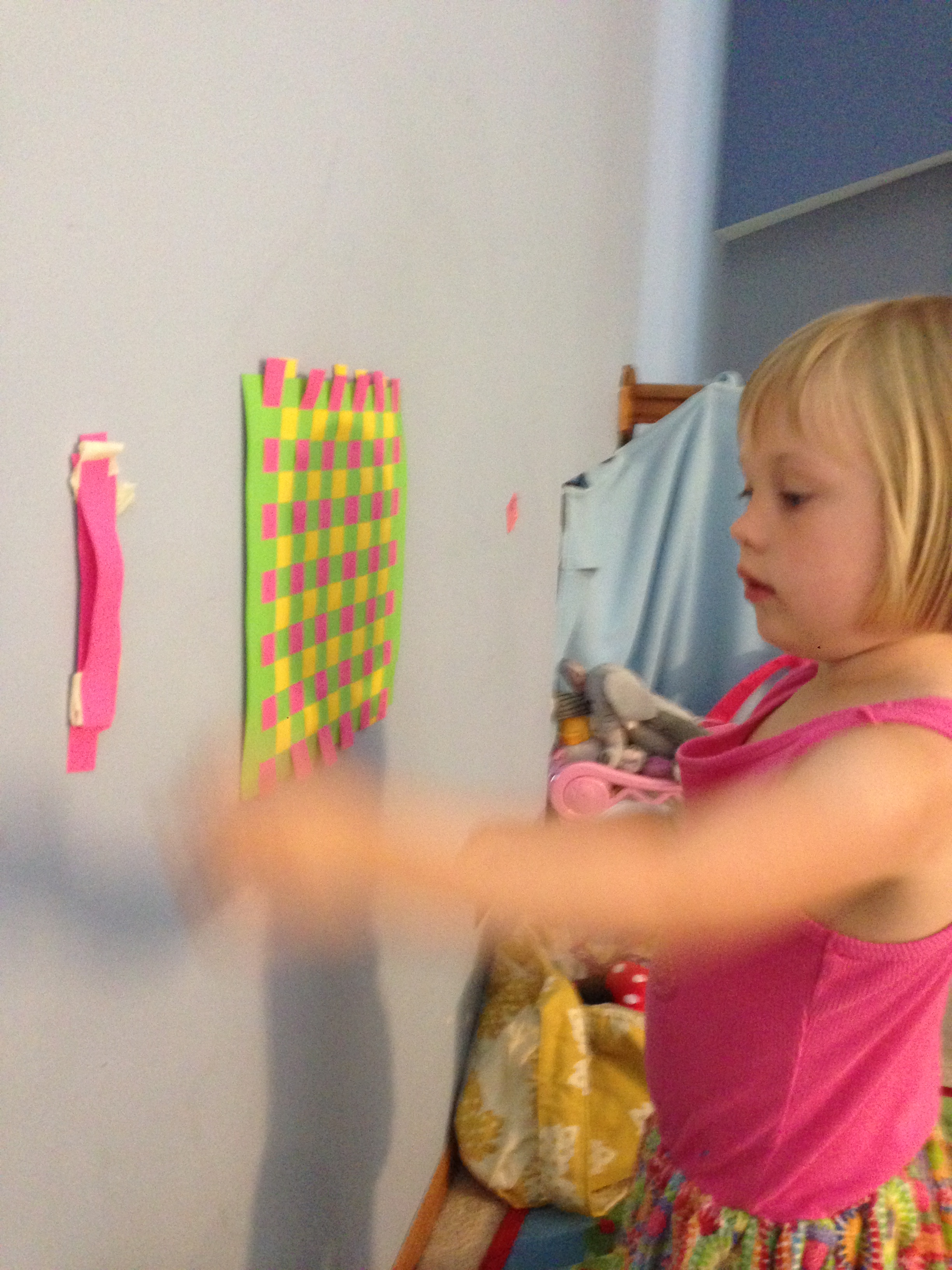
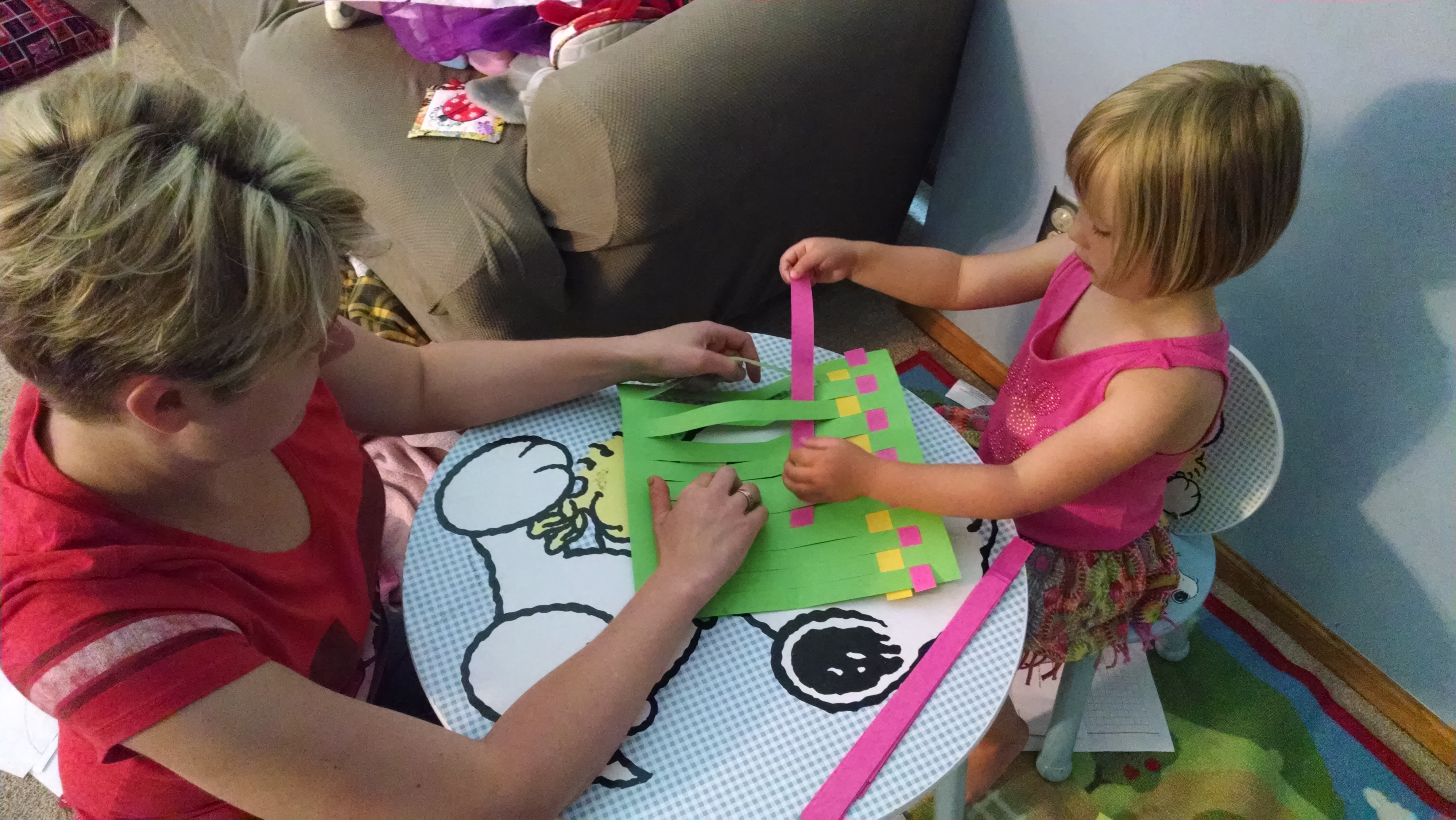
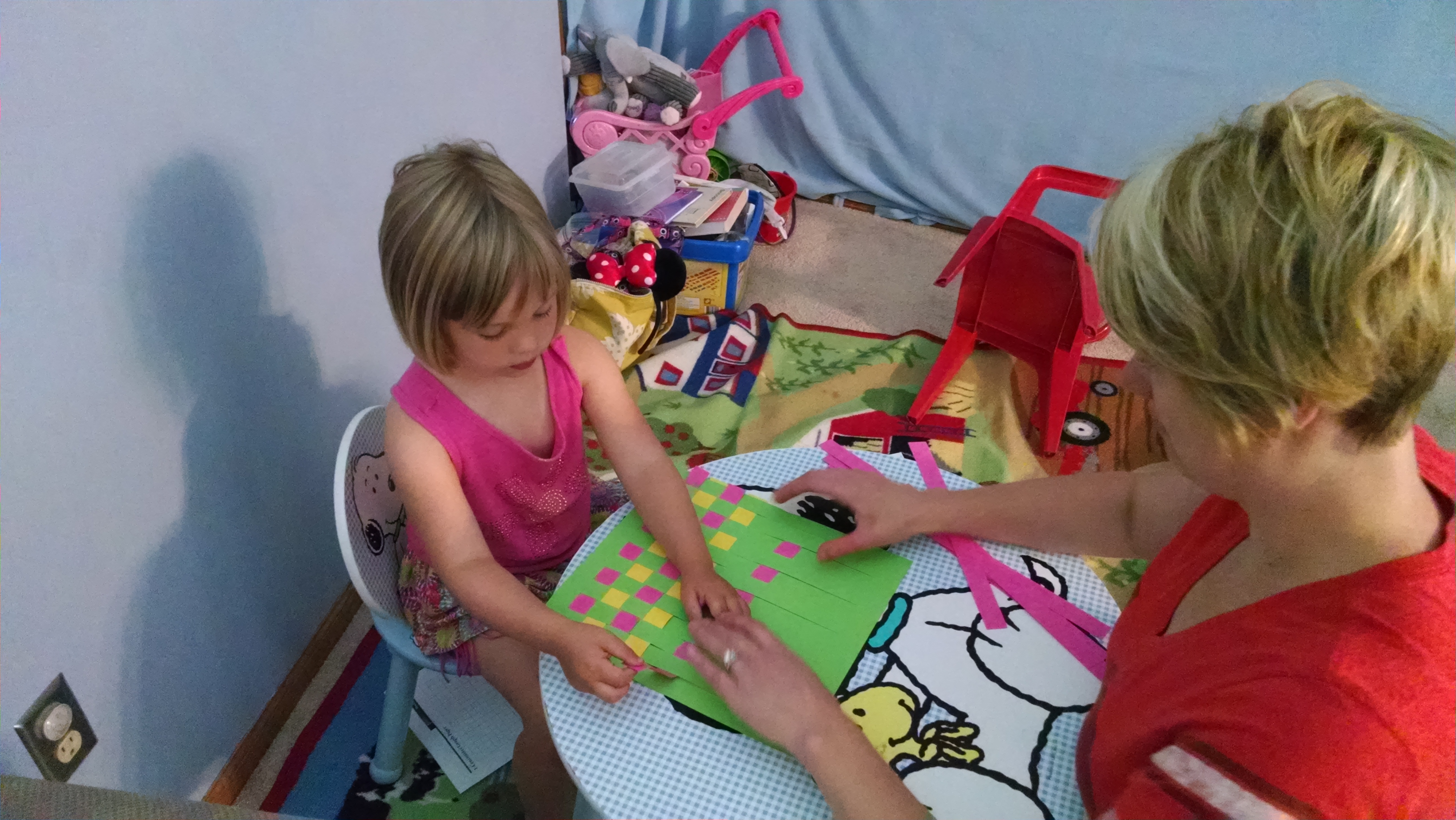
I was recently inspired by @mathinyourfeet‘s post: https://twitter.com/mathinyourfeet/status/479332580227964928 Hoping that this was a project that could be adapted for 3-5 year olds, I inquired about the details.  Malke Rosenfeld was one step ahead of me with a blog post.  Some background on my craftiness:  My mom is the crafty one.  Growing up, I’m sure she was frustrated that I never took to sewing or quilting, but her gift in that area is unmatched.  (Luckily, my brother ended up being the artsy one.)  It’s hard to believe I became a math teacher, but I don’t excel in the realms of ‘measuring’ and ‘cutting.’ I knew the 3.5-year-old focus on this was going to be short (9 minutes to be exact), I wanted to maximize our mathematical conversation.  First, she decided that she would be pink and I would be yellow (our respective favorite colors).  She also decided that the strips should be weaved in a pattern of pink/yellow/pink/yellow. IMG_5596

Next, she noticed that the papers were making small squares.  Because of the pink/yellow pattern, she pointed out a face with eyes and a nose.  🙂

IMG_5597

After about 3 pink strips, she groaned, “mommy, I’m getting really tired.  Can you finish it for me?”  Of course I wasn’t going to allow this craft to remain undone, but I think she appreciate the outcome.

IMG_5589IMG_5593

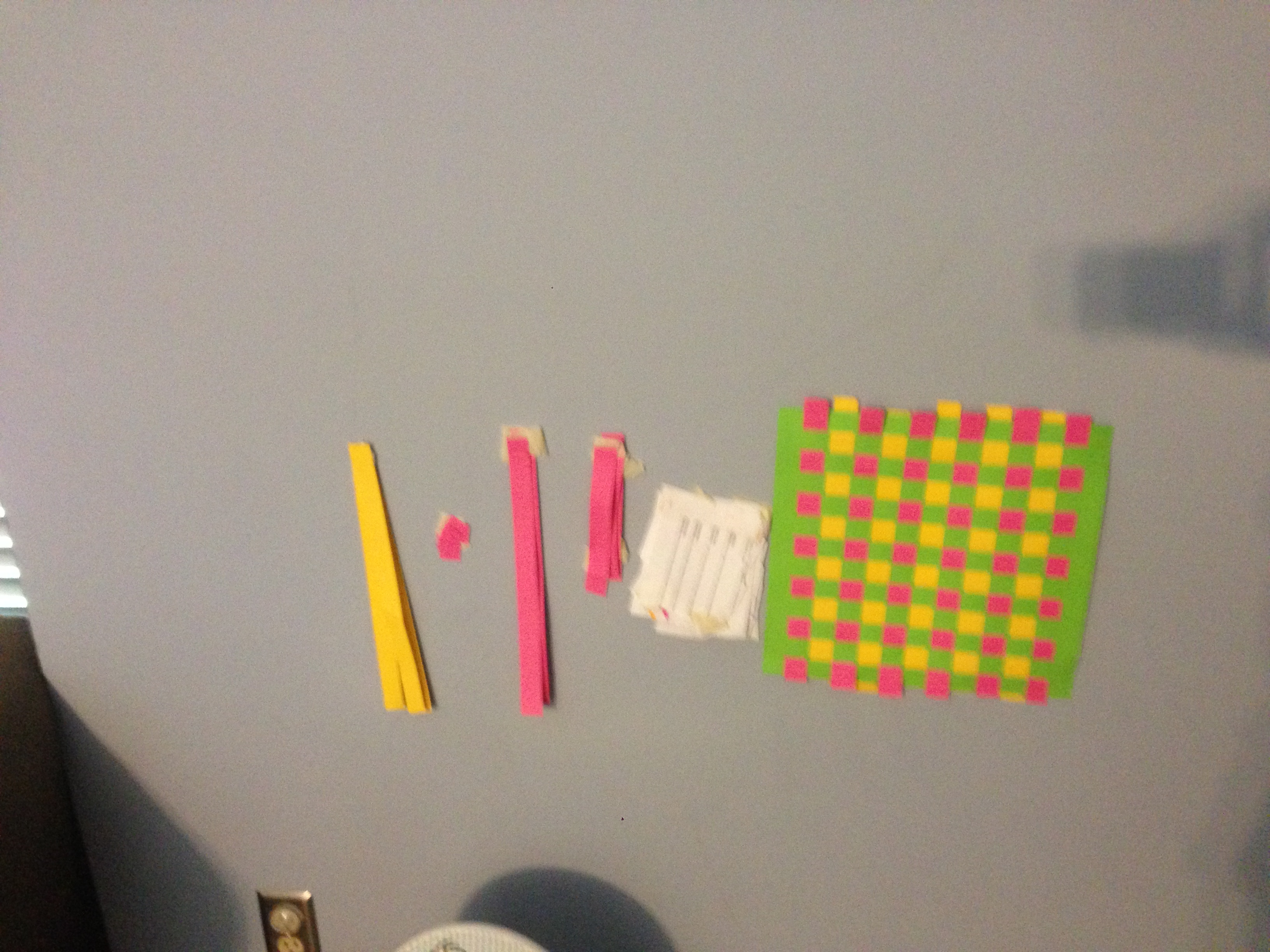
Luckily, the extra strips of paper didn’t go to waste.  They ended up as a wall decoration as well.  IMG_5603

Can There Be Quality PD for ALL Teachers?

This past week, I have the pleasure of attending Solution Tree’s PLCs at Work Institute along with 2200 other teachers, principals, superintendents, and other school leaders. My coworker did the quick math, and at $649 a head, that’s almost $1.4 million that Solution Tree collects in gross revenues just for the Minneapolis Institute alone. Attendees hailed from 17 states, however Minnesota, Iowa, and Wisconsin seemed to show up on the majority of name badges. Our district opted to send about 60 people to the conference, effectively emptying out our professional development fund for at least the time being.
I want to be fair and give this conference proper recognition. Despite the steep price tag, the keynotes and breakout sessions have definitely delivered as far as being relevant, engaging, and dynamic. The session presenters are highly accessible for questions and have been more than willing to provide quick access to resources, handouts, and templates. The building blocks/cornerstones/pillars of the professional learning community make it very clear that failure for students can no longer be an option and success past high school is mandatory to afford a middle class adult life. I saw many excited teachers and administrators alike as they envisioned how this collaborative culture can work within their own classroom setting. Research was resonating, pencils were feverishly copying quotables.

I thoroughly enjoyed Tim Kanold’s breakout sessions addressing PLC’s and the Common Core State Standards. It was refreshing and energizing to engage in discussions around mathematics-specific tasks. I was reassured when examining Dr. Kanold’s list of additional resources as they included many of the curriculum materials I’ve included in my instruction as of late – Illustrative Mathematics, Mathematics Vision Project, Engage NY, among others.

Ultimately I had a difficult time getting past the elephant in the room, or rather, the elephant NOT in the room. If the PLC model is as effective as the research suggests (and I believe that it absolutely is) than how does this valuable information get delivered to high-needs districts who cannot afford to send district staff to a conference costing over $600 per head? If this disparity in achievement between rich and poor students is widening and failure in today’s job market is truly not an option, then how do schools who don’t have flexible professional development funds get access to the quality expertise needed to effectively implement the PLC ideals? If we truly believe that ALL students can learn and PLCs are the best chance we have to do that, then isn’t it vital that our neediest districts have the proper training to carry this out? I’m grappling with this subtle silent theme prevalent in this conference that ‘We believe that teachers need to ensure that all students learn, but we are only going to ensure that those districts willing to fork over $650 per participant have the proper tools to make that happen.”  Instead, those schools, like the Chicago Public Schools are subjected to cringe-worthy professional development that makes us wonder why anyone would subject teachers to that kind of monotony.

When teachers have the opportunity to have conversations with other teachers from other districts, everyone learns.  Unfortunately, there is an entire segment of teachers, representing a huge number of students, absent from the conversation.  And in order to improve education for all of our students, we must include all teacher voices in the discussion.

Pair Products – An Nrich Favorite

In a few short weeks, I will be making a presentation at Twitter Math Camp on my favorite Nrich Tasks.  I know a lot of teachers have reservations about integrating rich mathematical tasks into their regular routines so I want to focus on problems that have that “traditional” feel while still allowing students to explore mathematical relationships more deeply.

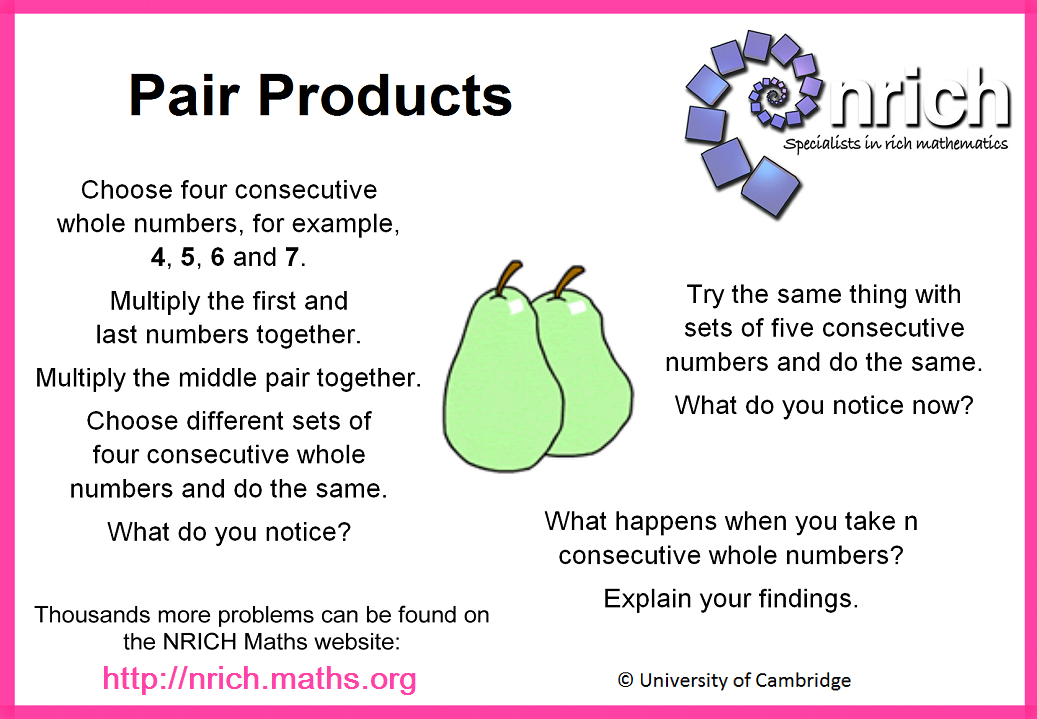
Pair Products is an amazing offering by Nrich and its low barrier to entry makes it accessible for all students.  After working through the problem myself, Nrich offers additional questions to raise the ceiling.

Pair Products C

Additional Questions to Ask:

  1. What happens when you use 4 consecutive even or odd numbers? 5? 6? n?
  2. What happens when you use 4, 5, 6, n consecutive multiples of 3? Multiples of 4? 5? 6?
  3.  (My Favorite) What happens when you use n consecutive multiples of w?
  4. Does your generalization from #4 hold for numbers that increase by .5?  (For example: 3, 3.5, 4, 4.5)

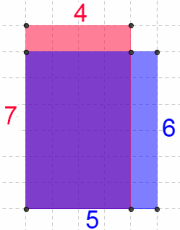
My favorite Nrich pair, Charlie and Alison, offer two different approaches.  Charlie explains a clear algebraic manipulation to arrive at two expressions with a numerical difference.  Alison, on the other hand, represents the product of numbers with an area model.

Alison

An interesting challenge might be to ask students to show the area model that Alison employs for some of the additional questions.


Twiddle dee Twiddla

Yesterday was our first official day of SUMMER.  So after a thunderstorm curtailed my gardening plans, I thought I’d check out some apps that have been on my to-do list for a while.   First up:  Twiddla, an online collaborative whiteboard.  Why a collaborative whiteboard?  Our school district uses Google Apps and there are many beneficial collaborative options through Google docs, sheets, etc. The problem:  Mathematics just doesn’t translate very well when typed or through a computer medium.  If I’d like kids to collaborate in real-time via the web, Twiddla might be a viable option for students to collaborate in real time online, with a blank canvas.

What I like:

  • No login required.  Just post the web address and kids are good to go.
  • PDF’s and images are insertable into the background.
  • There is a grid background as well.
  • Students can “chat” or audio conference while working.
  • A variety of colors, shapes, and line thicknesses can be utilized.
  • The Pro version (usually $14/month) is free for educators and students.
  • The writing is very smooth without a stylus.

What I did not like as much:

  • Annotations are added when writer “pauses” rather than as they are writing.
  • An “undo” button would be helpful.

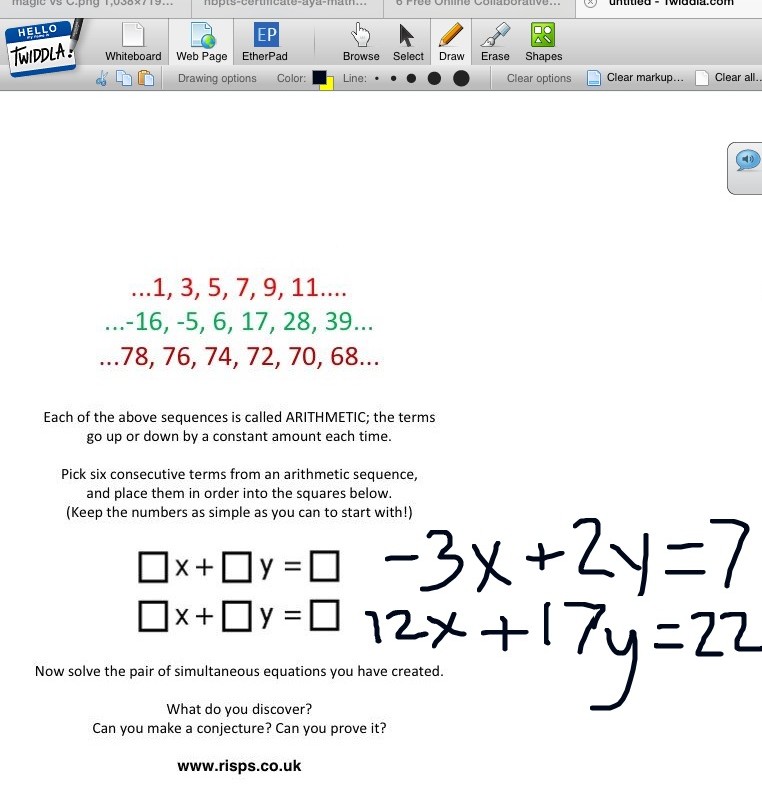
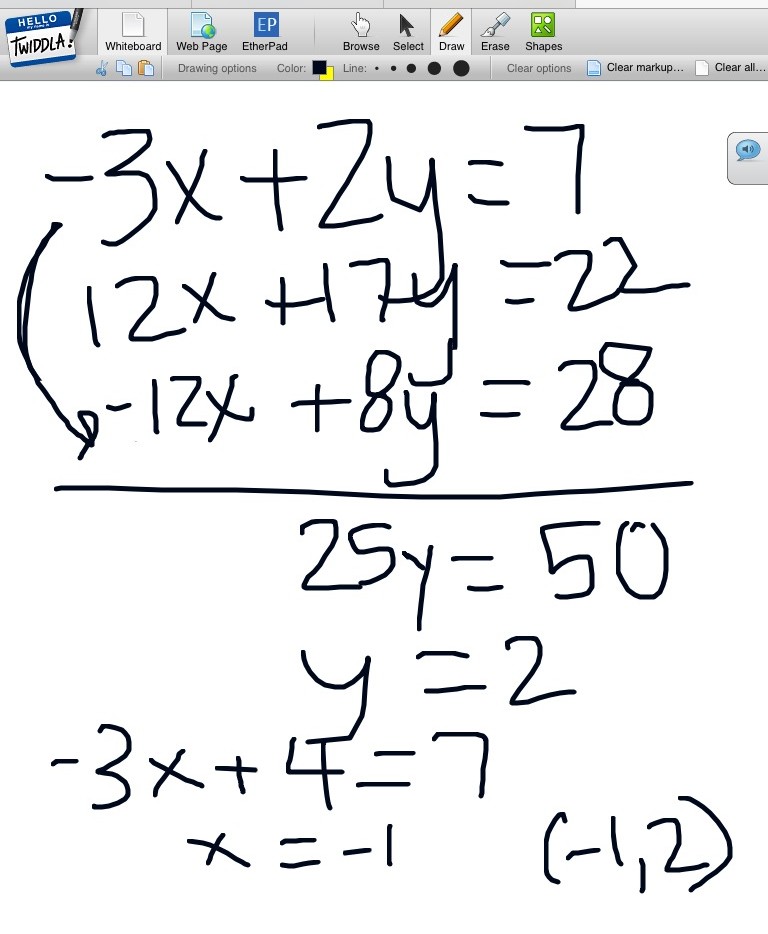
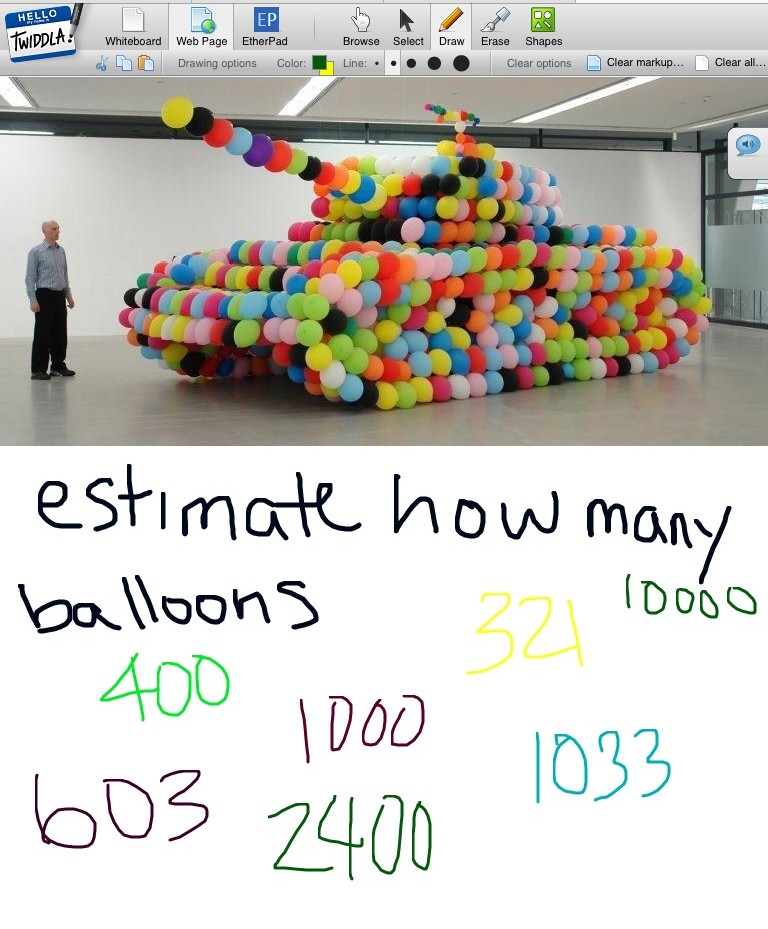
Some screenshots from my twiddla-created session:

 IMG_4068 IMG_4069 IMG_4071 IMG_4072

Now, I’ll have to wait until Fall to test this app out with students, but I’m optimistic about it’s potential.  It could just be one of those things that’s “cool” but in reality, pencil and paper will do.
Yesterday:  As much as I get frustrated by the attitudes and actions of my 5th hour, much of my resentment stems from the fact that I believe the situation in my class is my fault.  I feel like I’ve conditioned them by accepting disrespectful behavior in order to keep kids in the classroom.  As a result, the entire learning environment has suffered.

Today: So that was the beginning of yesterday’s post. I was concerned going into today’s class. Last Friday of the year and the fact that the school has been a circus compounds the issue. I was expecting chaos, but what I got was mathematical success. The difference was I demanded their attention in a more respectful way. I was firm, but polite, and it payed it’s dividends in student engagement.
We began with a simple math talk that I modeled from Fawn Nguyen’s March 21st math talk:

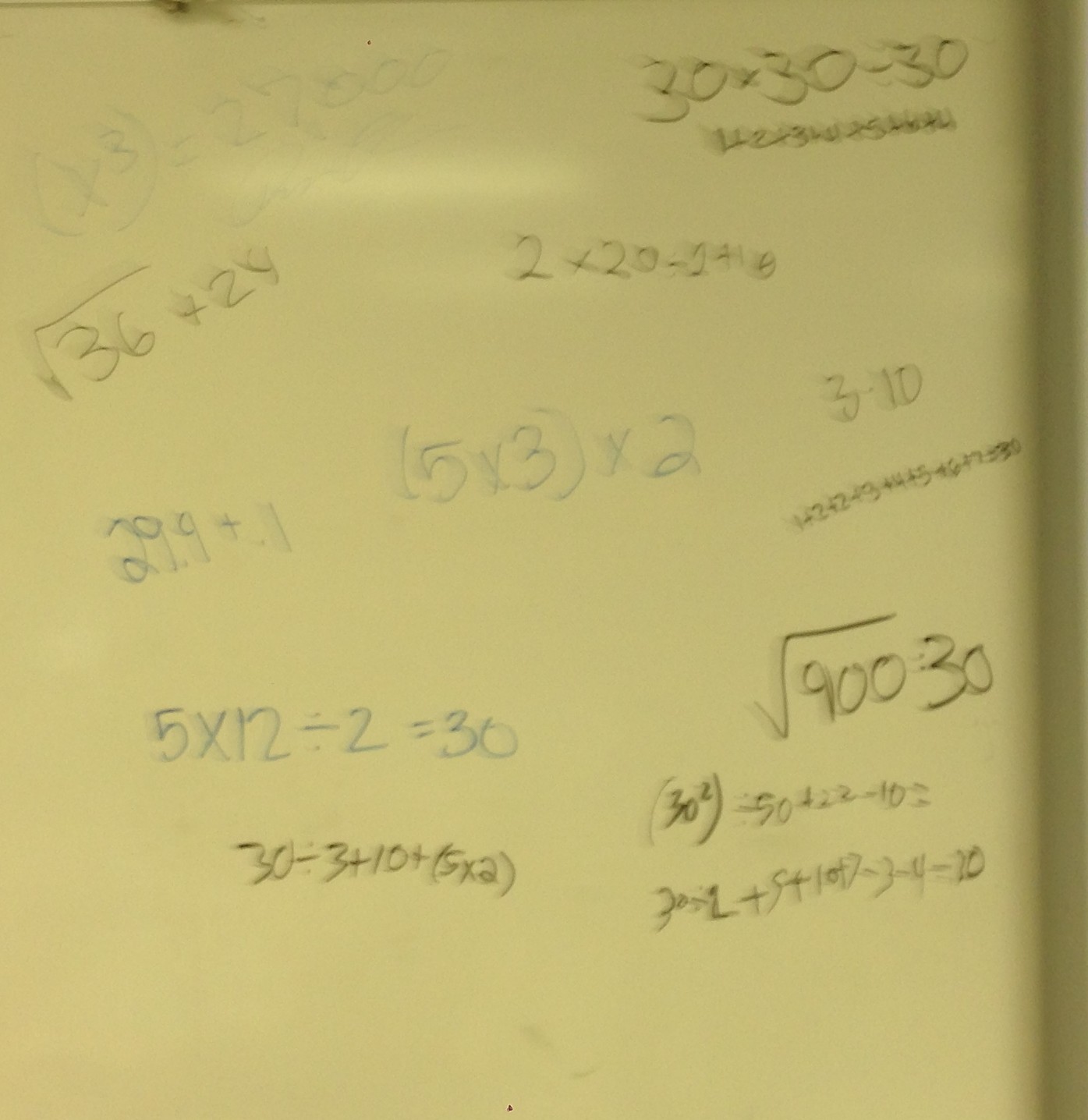
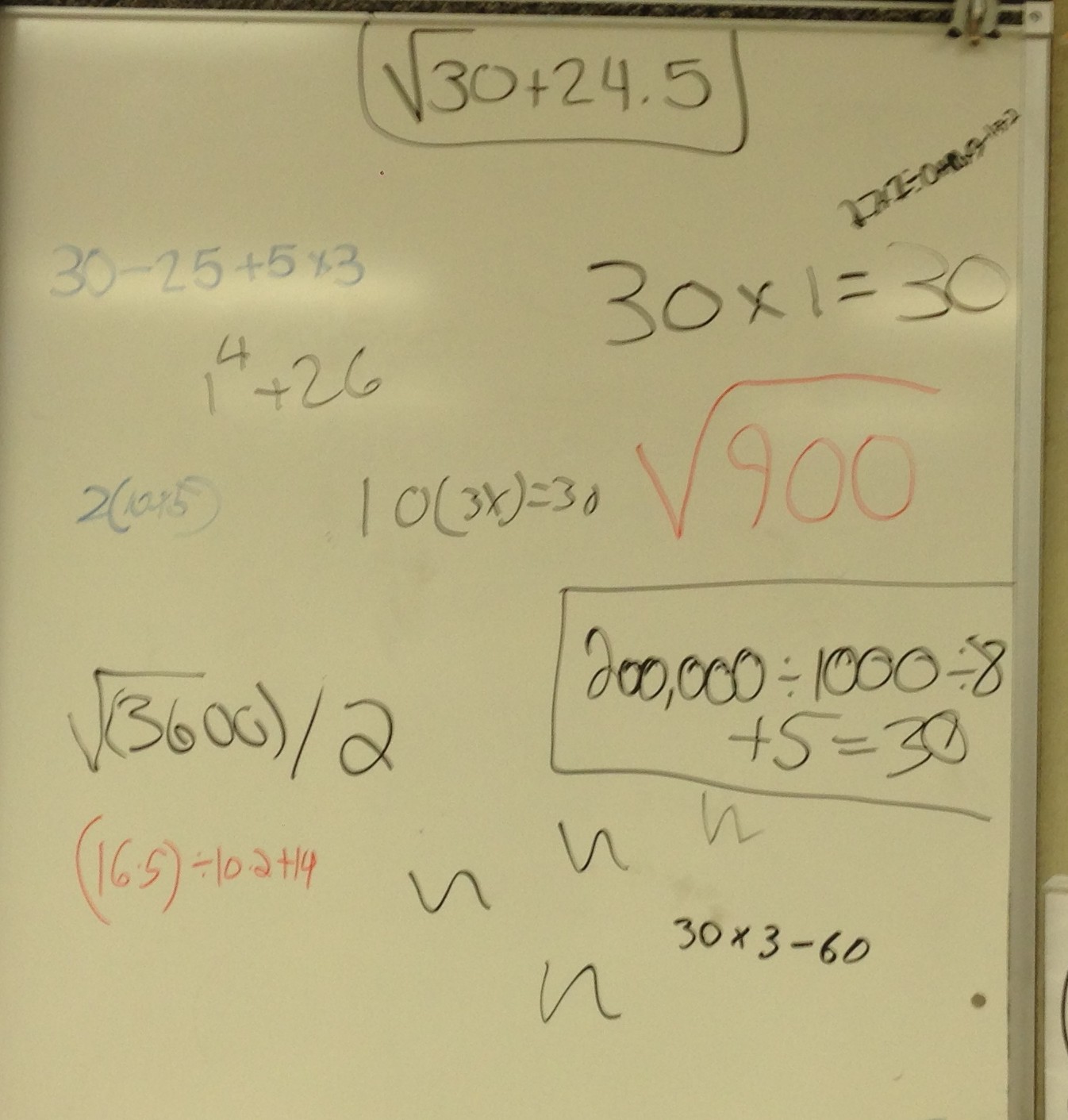
Today is the 30th day of the month.  Write as many equations you can that equal 30.

I gave them about 5 silent minutes. Then I let them use their calculators to come up with more gems.  At the end, I had them share their favorite or most complicated equation on the whiteboard.

IMG_5388 IMG_5389 IMG_5390


Here’s where the real magic happened.

Me:  Look up here and see if there are any equations you disagree with

Lots of discussions ensued about order of operations, square roots, rounding, parentheses, etc.  Overall, the activity lasted 30 minutes, which was about 29 more minutes of math than we did yesterday.

But the fun doesn’t stop there.  To boot, I introduced the Mathalicious Decoder Ring Lesson.  We watched the Christmas Story clip and talked about what a decoder ring does.  What I liked is that most of them were trying to figure out how the decoding worked, rather than just “get the worksheet done.”

Justin Aion stated poetically on his blog today the exact way I feel about this class:

We teach students long-term strategies to accomplish short-term goals and often don’t see any progress.  If we are very lucky, we’ll see the kind of growth we want by the end of the school year, but the growing season on students isn’t as regular as it is for other crops.  Each seed needs its own time to grow.We desperately need to get away from the notion that if it hasn’t sprouted by the beginning of June, then it must be a defective seed.

Brain Sweat

I’ve talked about my Algebra 2 class at length on this blog over the last 2 months, and as the trimester comes to a close, I want to celebrate the positives in this class as much as possible.  They frustrate me sometimes, but the bottom line is I’m willing to fight and fight hard to make their experience with math more positive.  Ultimately, they’ve been dealt an unfair hand:  crammed into giant classes and labeled incapable of high-level mathematics.  They are capable of more than they give, but they also deserve much more than they’ve been given.

The perpetual optimist in me wants to continue to celebrate their achievements and play the hand they’ve been dealt as best we can.  Today we took on Robert Kaplinsky’s Cheeseburger Lesson.  I’m not sure why I’m constantly drawn to this lesson, since the picture of the 100×100 makes me a little ill.  Perhaps it’s the constant student engagement I get from it, time after time.  The intriguing thought that someone actually purchased this godzilla-burger hooks students every time.

What I liked most about my class’s efforts toward this task was the multiple revisions they had before arriving at the correct answer.  I had many students assume that a 3×3 cost the same as three cheeseburgers, only to find that their burger only needed one bun.

Below is a student’s work that I really appreciated.  At the end of the activity, he said,

Mrs. Schmidt, I’m sweating.  I thought so hard on this problem that I’m sweating.  But I believe I have the right answer.”

photo 5

If I’m being completely honest overall, this class has tested me, day in and day out.  I’ve worked very hard, but in the end, I’m not sure I taught them much of anything worthwhile.  I hope I have, but I’m not sure I did.  A class size of 36 seemed insurmountable, and perhaps in some ways, I never really overcame it.  Unfortunately, next year’s class size projections promise more of the same.  The silver lining, however, is that I get another crack at teaching this same course, and I’m 100% sure I can do it better the next time around.

Probability Ponderings

It’s been a great week in my probability and statistics classes.  I’m not sure why I’m pleasantly surprised.  This time of year it’s absolutely essential that we engage kids in meaningful mathematics and when we do, they respond well.

Monday, we did expected value and Dan Meyer’s Money Duck.  See Monday’s blog post for details.  Extra Credit if you can find my duck pun in there.

Tuesday, after assessing expected value, we moved to tree diagrams and conditional probability.

Wednesday, I used Nrich’s In a Box problem to create some discussion about dependent and independent events.  

I started with a bag with unifix cubes and had them do some experimenting to see if the game was fair.  What I love about this problem is that the initial answers that the kids come up with are usually completely wrong.  It really allows the teacher to identify the misconceptions.  Additionally, this problem is so easy to extend.  Simply have the students come up with a scenario of ribbons that creates a fair game.  Most will come up with something like 2 red and 2 blue. Have them test their theory, find out it’s wrong and then test another.  Even when they find the magic combination that creates a fair game, there is still the task of generalizing the results that’s challenging.     

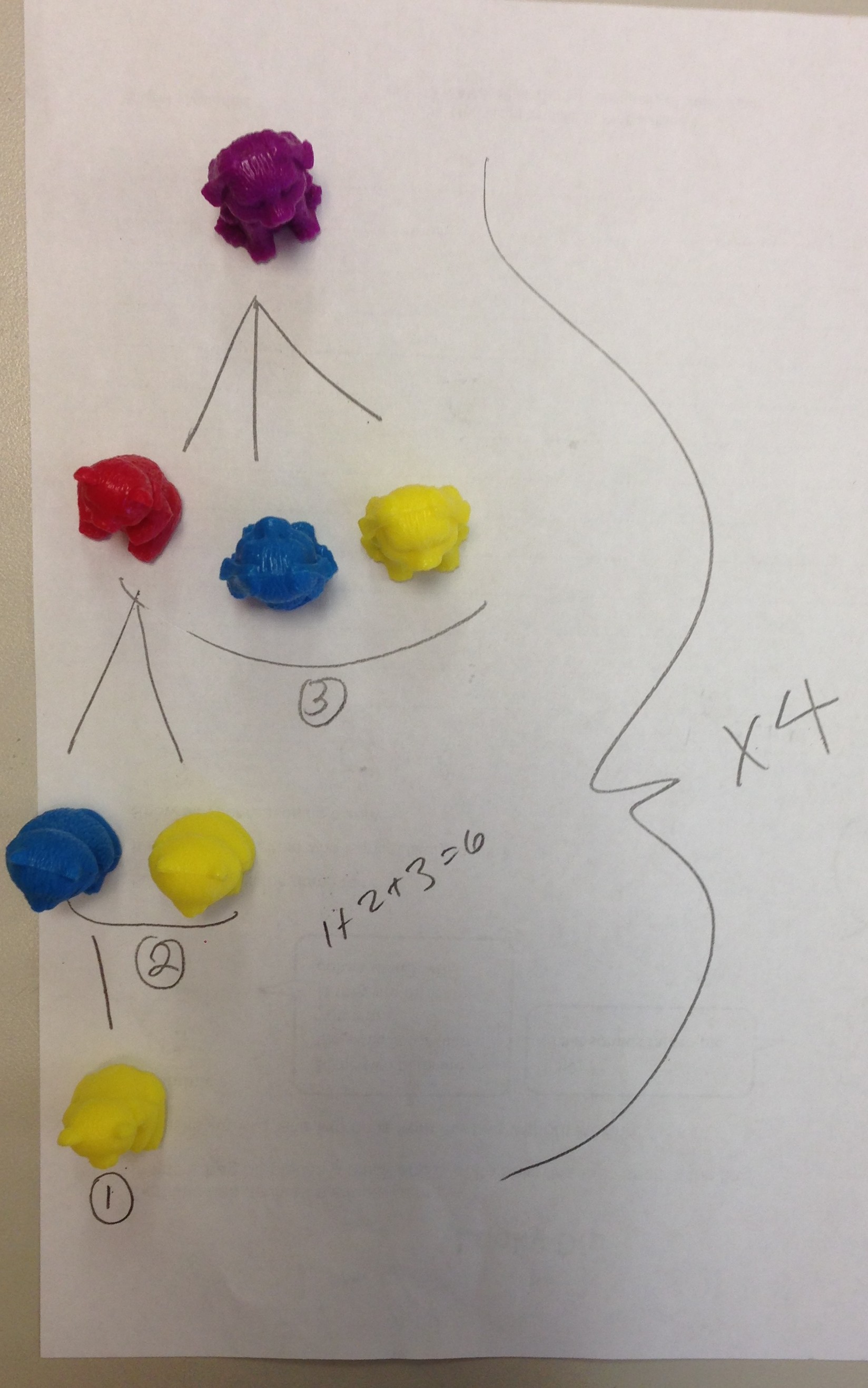
Thursday, I totally stole Andrew Stadel’s 4! lesson.  What a great intro to the idea of factorial.  Last trimester I used IMP’s ice cream bowls and cones, which I still might refer to.  I felt like having a few students up in front at the beginning got everyone on the same page at the same time.  It was completely awesome to see the different methods for solving this.  I love the repeated reasoning here:
photo

Plus, opportunities to use animal counters in HS math are scarce.

What’s the most pleasing about this week is that I think that this group’s conceptual foundation of these concepts is more solid than it has been in any previous year.  We still have practice to do, but I feel like they have made a good connection to what their answers represent.  In the past, my formula driven instruction didn’t bode well for retention of the concepts. I’m more hopeful this time around.

Thanks Ashli for the spectacular idea of sharing what adorns our classroom walls.  I’ve got the regular math posters, sports schedules, school policies, and motivational cliche’s, of course.  A classroom would not be complete without a stock photo along with transformational words like, “the key to success is self discipline.”

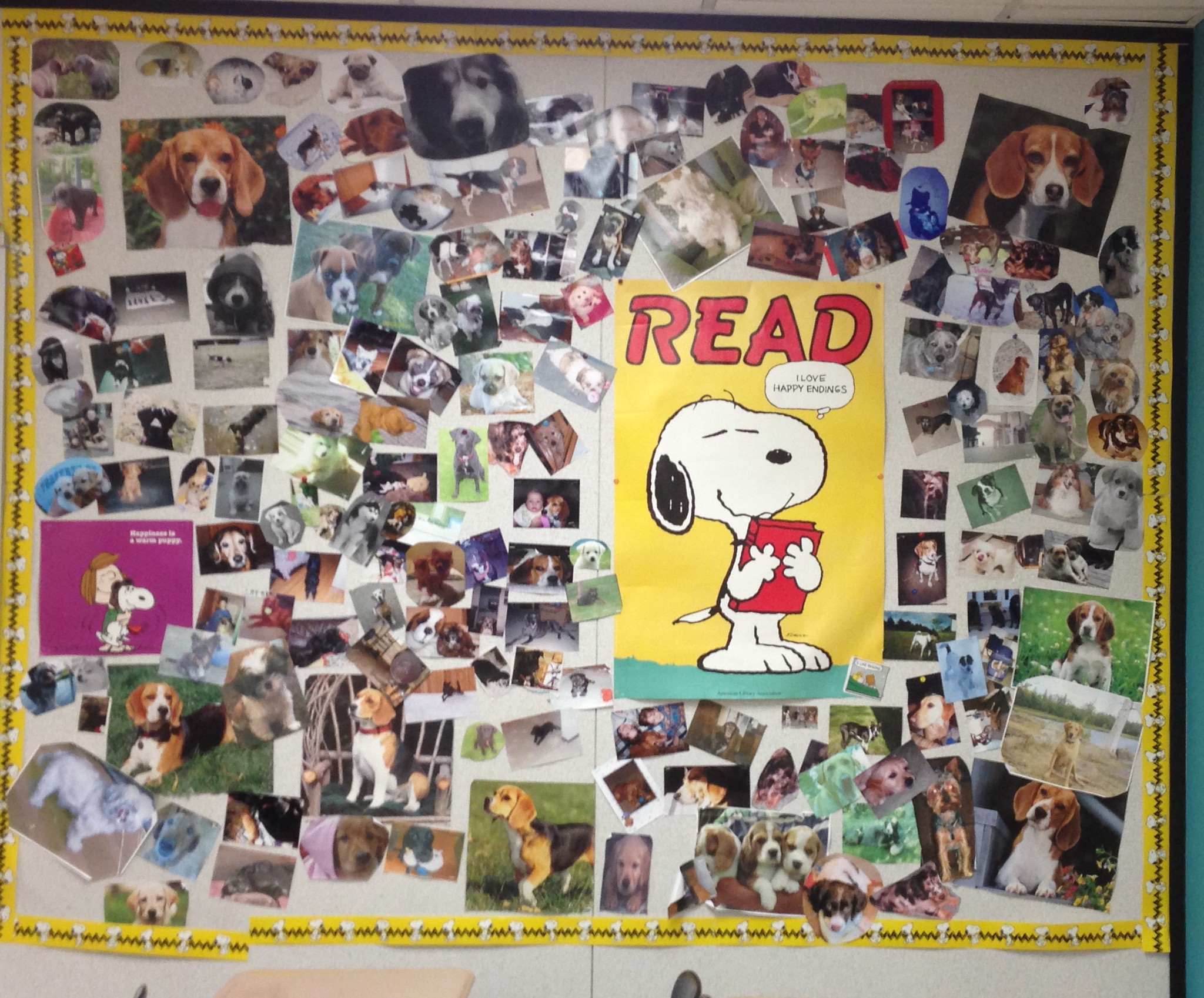
What really brings me the most joy in my classroom and truly makes my classroom mine is my dog wall.

IMG_5286IMG_5287

Ok, it’s actually two walls.  Backstory:  I love dogs, beagles in particular.  Duh.  But the reasoning behind my dog wall runs deeper than that.  Yep, the dogs are adorable and the kids love that they can put a picture of their own dog in my room.  I love it when I have younger siblings of former students, and they ask “hey, you have a picture of my dog!”

The real power behind the dog wall is acknowledging what dogs can teach us about love.   In short, no one on earth is capable of loving you as much as your dog.   Oprah gives us a nice example when remembering her cocker spaniel, Sophie.  If you have a dog, you know what I’m talking about.

I recognize that not all students are lucky enough to own a dog.  I also let them bring in a picture of any dog, but I make sure to mention that I like beagles best.

My plans for the expanding dog wall include using them for some estimation and data exploration.  Someday.