Talking Pizza and Pennies

Today was a banner day in my ninth grade probability and statistics class.

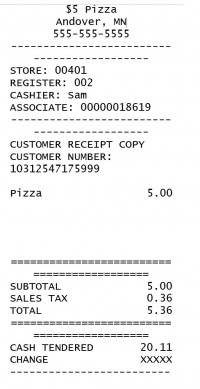
First, our number talk was a bite out of the real-world and not the “you and 5 friends share 8 pizzas” kind of real-world.  When my daughter has a babysitter, as she did last night, I usually spring for pizza.  (Yes, our vegan lifestyle maintains a real iron-grip on nutrition when mom and dad are gone.)  I even splurge on the good stuff:  $5 Pizza.

With tax, my vegan-less vice cost $5.36.  I gave the cashier $20.11.  How much change did I receive?

Lots of great strategies:  counting up, counting down, counting to the middle even.  It’s worth noting that the two students in each class that insisted on stacking the numbers and borrowing were not able to do so correctly.  I say this not to discount the standard algorithm.  Rather I wish to point out that in this case, when it’s necessary to borrow three times, the standard algorithm is blatantly inefficient.

The students had to know why on earth I would give the cashier $20.11 rather than just $20.  The answer: Quarters.  Because if you’re at the store with a 4 year old and you do not have a quarter for a gumball machine, god help you.

The main portion of the lesson was the real magic. This problem is from Strength in Numbers by Ilana Horn:

Imagine that you have two pockets and that each pocket contains a penny, a nickel and a dime.  You reach in and remove one coin from each pocket.  Assume that for each pocket, the penny, the nickel, and the dime are equally likely to be removed.  What is the probability that your two coins will total exactly two cents?

They sit in groups of three or four.  I gave each group a large piece of paper, had them put a circle in the middle for their final solution and then divide the paper into 4 sections for their individual work.  When looking through my pictures of student work, I noticed that I have a tendency to capture correct work (but differing methods), but I do not take photos very often of incorrect work.  Today, I changed that.

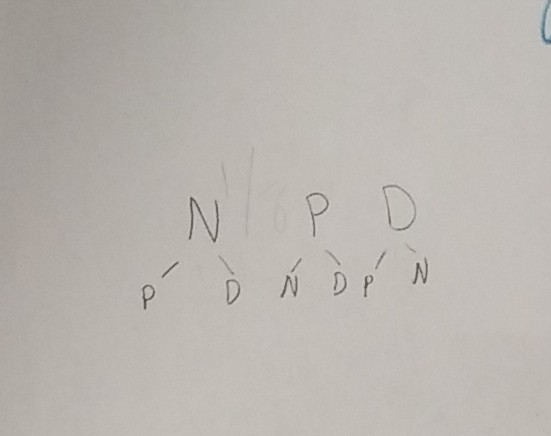
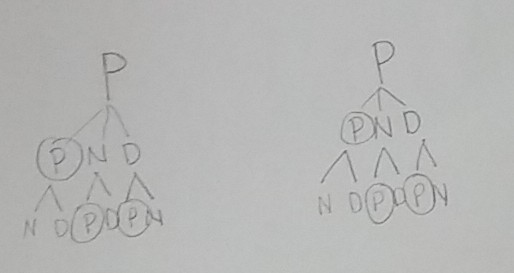
Here is a sample of their strategies for determining the number of outcomes:

0519151329a 0519150944b 0519150943c 0519150943 0519150943b0519151329a

The level of discussion was exquisite.    But what’s more important was that they were able to work together to organize their thinking and to make sense of their solution.  They built on what they knew an gained conceptual understanding as a result.  In addition, they were able to focus on understanding their path to the solution rather than simply being satisfied with the solution itself.  I’m very proud of them.

Making Math Talks a Habit

How many dots are there?  

One of the best experiences about being a teacher is the opportunity to bear witness to student sense-making.  I enjoy hearing learners help one another develop different ways of approaching problems because I know this is a skill that will transcend mathematics class into when-are-we-ever-going-to-use-this land.

I was first introduced to the idea of a Math Talk when I was taking Jo Boaler’s online course How to Learn Math.  This one is simple enough that anyone able to count can do it.  Seriously, take a second and give this one a go:

How many dots are on the card?  How did you determine your answer?  

How many dots are on the card?  How did you determine your answer?

The answer of ten is hopefully quite obvious to your students.  But it’s the incredible number of ways in which they determined that answer that blows me away.  Is it two rows of 3 and two rows of 2?  Or is it 4 diagonals of 1, 2, 3, and 4?  Maybe 5 in the top 2 rows and 5 in the bottom 2 rows?  Perhaps 5 pairs of vertical dots catches their eye?  THESE ARE JUST DOTS, PEOPLE!  All of this awesome thinking over dots arranged strategically on a piece of paper.  But these dots opened the door to my getting my students to explain their thinking to one another.

Fast forward to MCTM this past weekend.  I was reminded of the power of the Math Talk at a session hosted by Christy Pettis and Terry Wyberg.  I knew Fawn Nguyen had some wonderful examples on her website, so I jumped in.

The results have been lovely.

Monday:  Which is greater 79×25 or 75×29?

Tuesday: Visual Pattern #10

How would you have determined that there were 85 puppies in step 43?

How would you have determined that there were 85 puppies in step 43?

Wednesday:  Which is greater 12/17 or 5/8?

There were many lovely responses to all of these questions in each of my classes. But the one that stands out as my favorite was Caytlin in my 5th period Algebra 2 class.  For Wednesday’s problem, Caytlin says that it’s easier to compare the reciprocals of those fractions, so she flipped them over to compare 17/12 and 8/5.  When converted into a mixed number, 1 and 5/12 is smaller than 1 and 3/5.  The opposite would be true for the reciprocals of the numbers.  Therefore, 12/17 is larger than 5/8 since its reciprocal is smaller.

Honestly, isn’t that golden!?  What I love about math talks is that students are asked to make sense of the problem themselves.  They aren’t shown an example or taught a rule.  They develop their own method and then help their classmates by sharing it.  There have been a lot of good experiences in my classroom this year, and math talks rank up there near the top.

(For additional information on math talks, I recommend the book Making Number Talks Matter by Cathy Humphreys and Ruth Parker)

Secret Teacher Problems

I came clean recently about my addiction to alcohol, and this past Tuesday, March 31st, I celebrated 3 years of sobriety.  As problems have arisen (a broken thumb is a fine example), I know that no problem is so big that alcohol won’t make much worse.  Trust me, I’ve tried alcohol as the solution more times than I can remember.  It failed ten times out of ten.

Rewind about 4 years, and you’ll see a teacher who’s put together on the outside, but falling apart within.  I kept beer hidden in the garage, wine stashed in the basement, and vodka in my purse.  All because of fear.  Fear that people would discover the unhappy person that loomed underneath my smile.  After a drink (or five), I could keep up that smile that I believed others wanted to see.  I had a happy marriage, a beautiful daughter, a great job, and financial security.  There wasn’t a reason to not be smiling, so instead, I drank.  And then I constantly lived in fear that my secret would be discovered and that i wasn’t truly as happy as I outwardly appeared.

As teachers, we are all control freaks. Every. Single. One of us.  I’m even exhibiting controlling behavior with my insistence of putting on a happy face outwardly.  It’s a more subtle type of control, but it keeps others at bay from what’s going on beneath the surface.  It’s similar to those who use humor to deflect serious conversation.  If we keep people laughing, we deflect their attention from the pain that lurks beneath the surface.

Yes, the degree at which we exhibit control varies from teacher to teacher, but can you think of anything more terrifying than a chaotic classroom? I know I’ve been awakened from that nightmare more than once.

Even if you’ve had no brush with addiction I’d venture to guess that the Serenity Prayer is something familiar to you:

God, grant me the serenity to accept the things I cannot change, the courage to change the things I can, and the wisdom to know the difference.

Putting any religious context  aside, this prayer has powerful implications to the classroom . what is it in my classroom that I have the power to change? Do I have the necessary courage to face the challenges head on? Can I discern the difference between what is teachable and what is not?

More important recently, am I able to take what I preach in my classroom and apply it to my personal life? Do I have the courage to say “no, I cannot,” but more importantly be at peace with a decision to step away?

Because as control freaks, it’s one thing to say no and quite another to accept that decision. Relating this back to the Serenity Prayer, I’m very good at trying to change the things I can. I’d also say I do a decent job at knowing the difference between what I can change and what I cannot. It’s the serenity to accept what cannot be changed that gets me every time.

What a Difference 12 Kids Make

from map.mathshell.org

We’ve entered Spring Trimester and the volatile Minnesota weather is cooperating thus far.  If there’s a silver lining to last year’s Spring suckfest, the lack of warmer weather put off the end-of-the-year slide until closer to May.  I’m not sure we’ll have the same luxury this year.

I teach the same level of Algebra 2 that I did last year but my class sizes are a more manageable 22-24 rather than the monstrosity of 36 I had last year.  I know class size isn’t high on Hattie’s list of influences on student achievement, but providing formative evaluation (something VERY influential, according to Hattie) is much more doable with 20-something rather than 30+.

I’ve left the desks in pods because I’m convinced students interact and collaborate mathematically more often when they have multiple classmates within conversation distance.  I want to switch their groups periodically, if only I could get them to sit in their assigned seat!

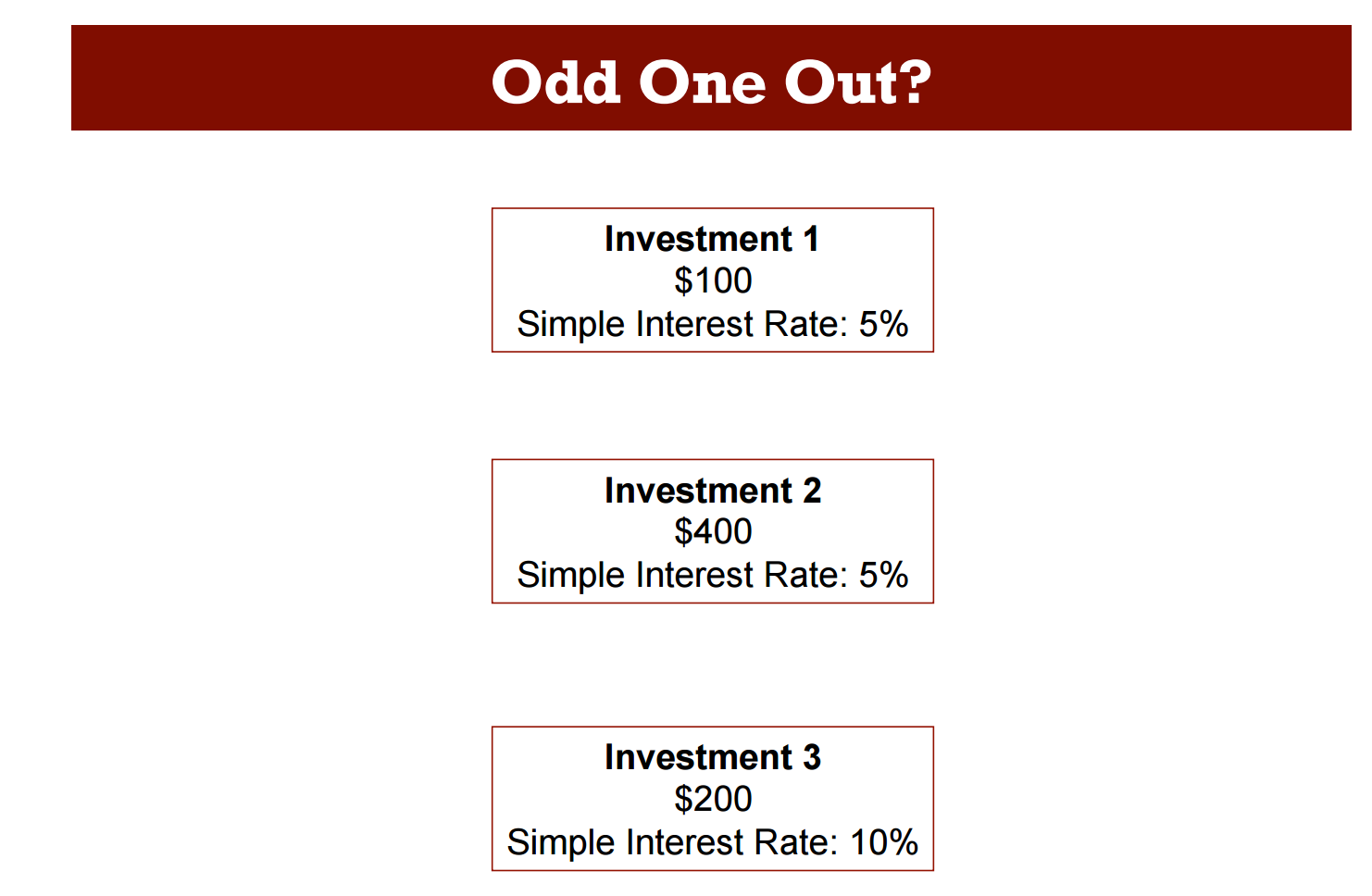
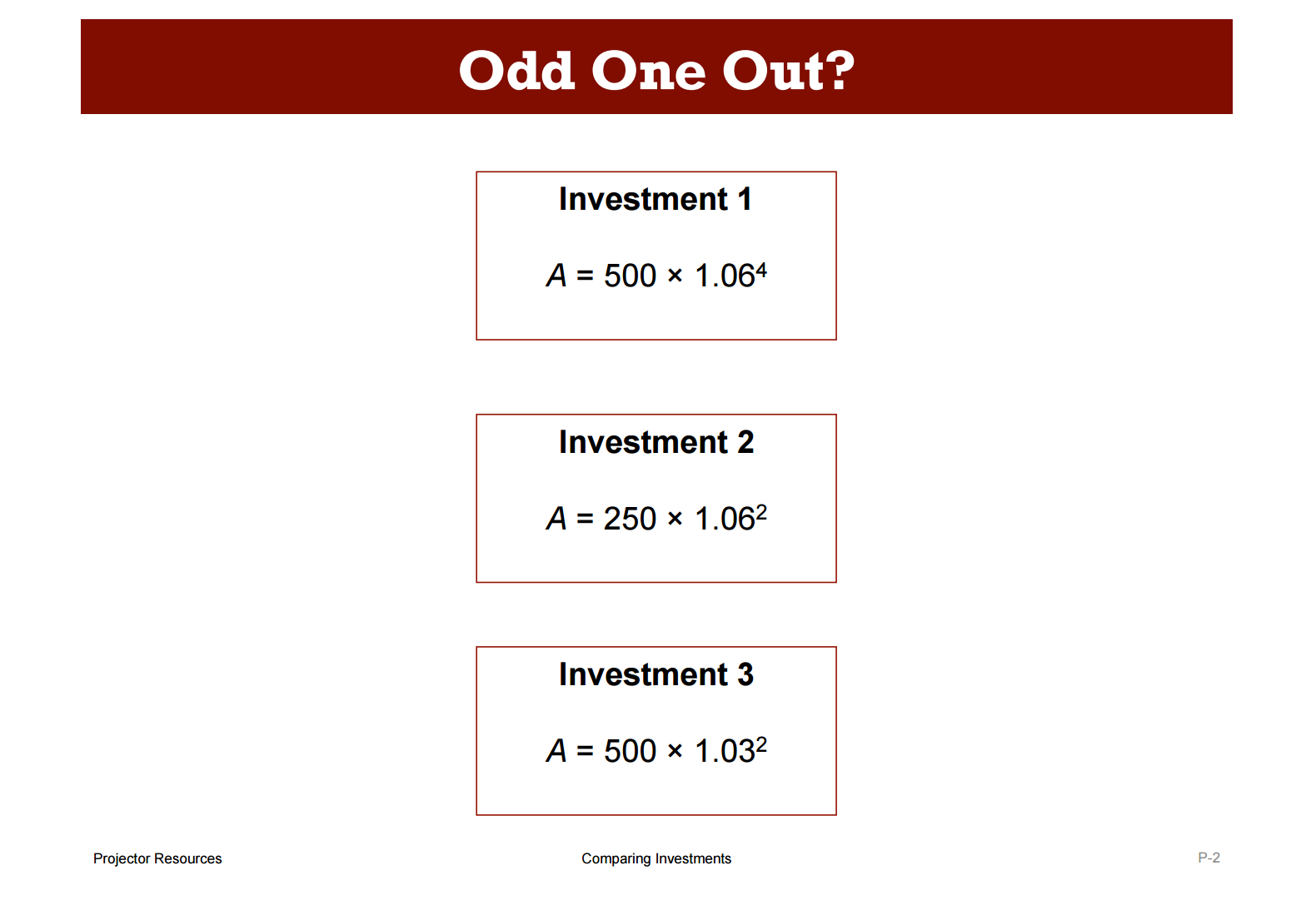
One of my go-to resources is the Mathematics Assessment Project. Their lessons are robust, and provide good opportunities for students to have great conversations around the mathematics.  This lesson on investments is no exception.  The main activity is a card sort where students match a principal and interest rate of an investment with a formula, graph, table, and description.  But the everything from the pre-assessment to the closing slide makes students think and share.

Here are the openers of the main lesson:

from map.mathshell.org

from map.mathshell.org

from map.mathshell.org

from map.mathshell.org

My assumption, not being familiar with this group of kids, was that they’d go right for the obvious – Investment 3 is the odd one out because it has a 10% interest rate and the others have a 5% interest rate.  I underestimated them.  They came up with very creative, thoughtful reasons why each investment could be considered the odd one out.  I really like these questions because all three can be correct, and students have an opportunity to defend multiple answers.

The card sort was also spectacular.  I was able to have great conversations with each group about their thinking. (Yes, that’s much easier to do with 24 rather than 36).  What a difference 12 kids makes.  There is so much to this lesson to love.  If you have a unit on exponential functions, give it a try.  I’d love to hear how it went in your classroom.

Emotional Baggage Around My Wrist

This blog post is more personal therapy than it is educational reflection, but I hope that others dealing with similar strife can relate and find solidarity.

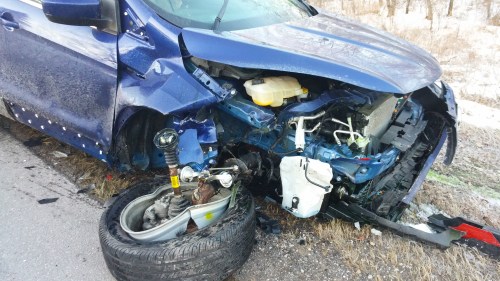
Two weeks ago, I was in a car accident on the way to school on a clear, dry, sunny Monday morning.  I was heading north on a county highway when a car pulled out from my right to head south.  My SUV slammed into him at about 50 miles per hour deploying all of my airbags and sending my car into oncoming traffic.  When my car came to a stop on the opposite side of the road, I was relieved that my Sync system was dialing 911 on my behalf.  Who knows where my cell phone was at that point.  Fifteen minutes later, a police officer arrived.  The driver of the other car was issued a citation for distracted driving and my mangled Escape was hauled away.

0302150702a

My Ford Escape immediately following the accident.

The pain that remained in my hand kept intensifying as the morning went on, so instead of waiting for a doctor appointment to get myself checked out, I headed for the ER.  Sure enough, my left thumb was fractured.  The airbag that saved my face instead broke my thumb when I gripped the wheel, bracing for impact.

I was angry.  Thumbs are important.  Two working thumbs are a lot more productive than one.  I didn’t cause this accident, yet I’m the one left with a broken hand, smashed car, and sore neck. To add more gas to my resentment-fueled fire, the Doogie Howser-esque orthopedic surgeon informed me that my busted digit would require pins to heal properly.

This past week, I’ve thankfully moved past anger but haven’t seemed to be able to rise above the emotional grip this hand cast has had on my day-to-day functioning.  I couldn’t imagine that having difficulty taking the cap off of a dry-erase marker would have such a strong emotional impact.

This week we began a new trimester, so I struggled with the decision to take a few days off of work so I could wrap my brain around this injury and release myself from the emotional handcuff surrounding my thumb.  Our culture accepts physical injury, but the unseen toll on our mental well-being is what really needs the most care.

The part of the first step in Alcoholics Anonymous is accepting powerlessness over alcohol.  While this is true for addictions in general, that thinking is also applicable here.  I am powerless over my broken thumb, the 6-week casting period and my physical disabilities resulting.  My emotional interpretation of the event, however, is completely in my control, and I’m determined to make the best of it and be a better person because of it.  Life is full of lessons, and this one is teaching me humility.  I am determined to be humble enough to accept it.

Dear Students: No. I’m Not Sorry.

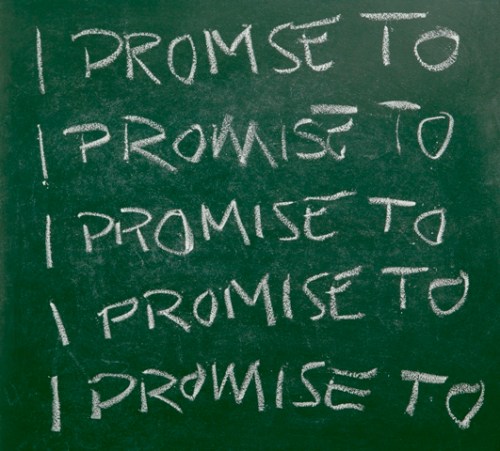
Picture from: http://www.advantagecapitalfunds.com/blog/wp-content/uploads/2013/10/I-Promise.jpg

I read a very moving blog post in which a teacher apologizes to her students for the problems plaguing our education system and hold students back.  While I agree with Lizanne Foster’s view on the way schools are structured, I felt she was taking blame for elements of students’ experiences over which she has no control.  I wanted to follow her blog up with a reminder that students don’t need teachers to feel sorry for them; they need teachers to empower, inspire, and motivate them to do better when they leave the classroom than they did when they entered.

Although you have to be at school so early each morning, I promise to make those early morning minutes worth getting out of bed for.

Even though you have to ask permission to use the restroom, I promise to respect your good judgement for appropriate times to leave the classroom.

I promise to create opportunities for you to get out of your seat and move about.

I promise that even though you are pre-grouped by age, I will provide you with problems that engage all levels of intellect:  problems that stretch you as well as provide scaffolding as needed.

I promise to create an environment where you feel safe in making mistakes.

I promise to allow you to solve problems collaboratively because I know “together” is where the best solutions come from.

I promise to work hard to provide the support you need to further your learning.

I promise to do my best to help open your mind to subjects and ideas that may have once seemed boring.

I promise that you will have my respect at all times and do not have to earn it.

I promise to never make you compete for grades.

I promise to give you opportunities to apply mathematics to solving our world’s economic, environmental, and political problems.

I promise to encourage curiosity throughout your learning experiences.

I promise to always let you examine, explore, experiment and experience.

I will try every day to re-ignite your passion for learning you had when you were young.

I will attempt to bring out your inner-scientist/writer/architect/artist whenever I am able.

I accept and understand that you were born to learn and that memorizing is not learning.

I promise to never make you feel that the only learning that matters is learning happening in a classroom and I promise to never focus your learning on just what will be covered on the test.

I promise to facilitate as much “out of the box” thinking as I can and will always present problems that allow for multiple solution paths.

I am mostly powerless over these powers-that-be that determine funding for your education, but I will do anything I can within my control to make learning in my classroom a positive experience for you and your classmates.

Sincerely,

Your Teacher


Des-Man Does Double-Time

If you work at a high school, you probably don’t need a reminder that it’s Friday the 13th, and it’s the day before Valentine’s day.  When it comes to adolescents, the mood is a mixture of giddiness and angst.  A student asked his girlfriend to prom by filling her locker with ping-pong balls.  No doubt every student in my 3rd hour was able to snag one of those little white balls of sound-joy and test their durability all over my classroom.  Good times.

Regardless, I was determined to make an attempt at engaging them mathematically.  Enter Sandman (oops.  DES-man).  I had read on twitter about teachers using this activity as a platform for having students share graphs.

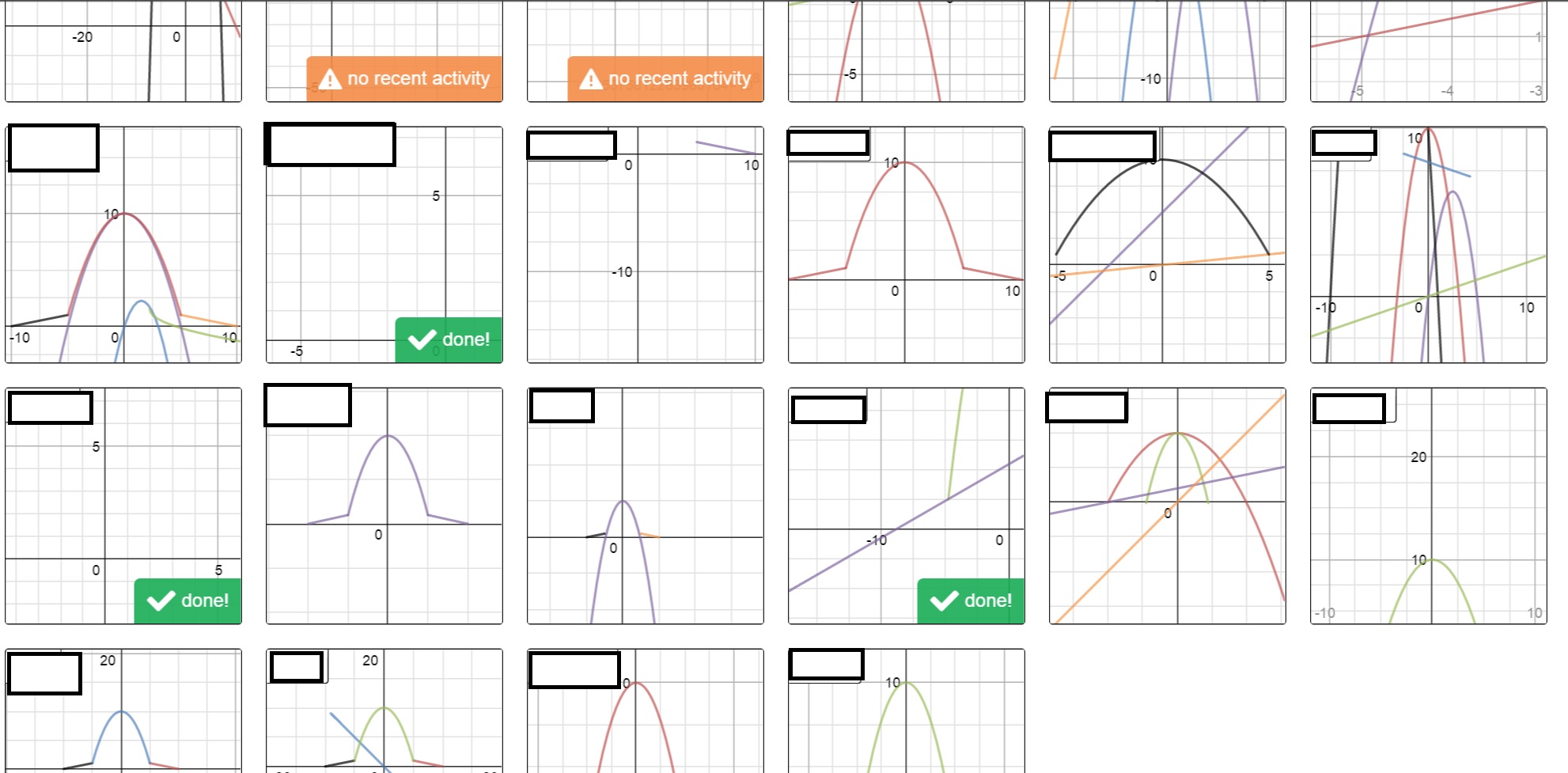
I posted a Daily Desmos graph on the projector and then watched them attempt to create it using the Des-man Dashboard on my tablet.  It was delightfully challenging for them to get the graph through the correct points and restrict the domain perfectly.

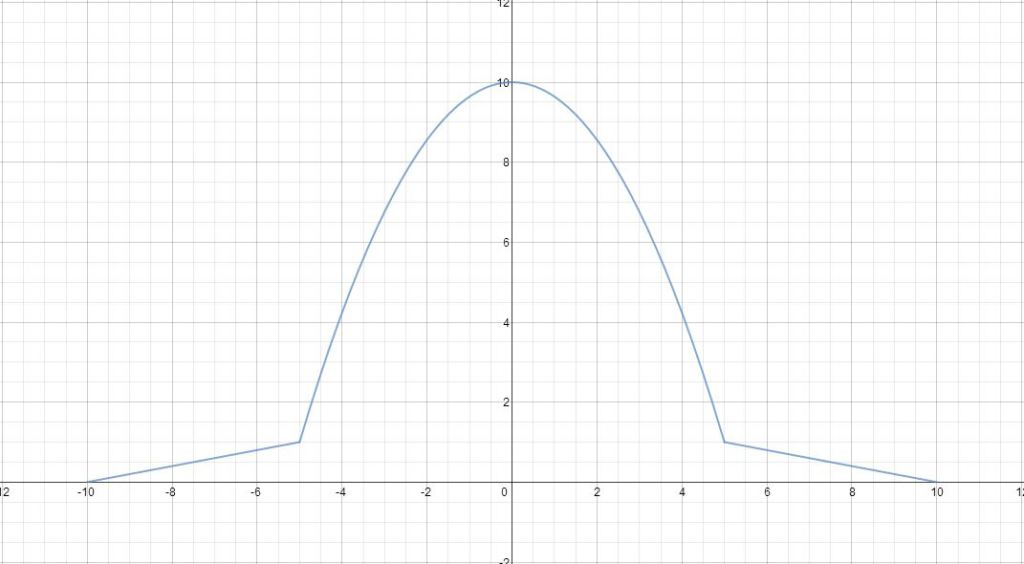
Because this was our first time formally restricting domains and ranges for piece-wise functions, I kept to the basic challenges.  Here’s one that stumped a few of them:

dd241b

(Thank you @marybourassa)

Here was their attempt:

Desman

I’m pretty sure I got so excited about the possibilities in my other classes that I took my tablet and raced down the hall to share the awesomesauce with my colleagues.  Not sure they were as geeked out as I was but they humored me regardless.


How Do We Define “Pep”?

Unexpectedly, I decided to supervise the commons area during a pep-fest and took that opportunity to take a page from Christopher Danielson’s book and bring some games and leave them for students to “discover.”

I chose a few that were more portable and set them out.  No one bit.  

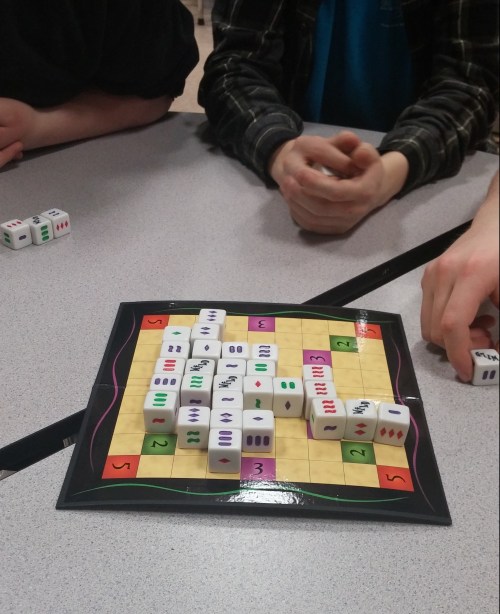
I could have packed them up and continue on my merry, grading way, but I thought, “NO.”  This was the second time this week my game-bait had been rejected and I was not having it. (The first was from my daughter who caught onto my clever placement of shapes as soon as she walked in the door)  There were about 15 kids in the commons area, and I was determined to get at least 5 of them to play Set Cubed with me.

So I called a few of them over, taught them how to play, and some serious fun ensued.  It was four boys and I for 45 solid minutes, and no one flinched for a second to check his phone.  Not one of them.

Here’s what I learned:

This week was Snow Week at our school.  Four themed dress-up days,  a talent show, a dance, and a pepfest. Something for everyone!  Well…most everyone.   Students who don’t wish to attend the pepfest must bring a note from their parent excusing them or they can sit in the commons area for the hour.  It’s safe to assume that the heavily involved students attend the pepfest, some begrudgingly go, and many students opt to bring in a note excusing themselves.

That leaves a small group of students who do not feel a connection to school spirit and do not have another ride home.  They’re marginalized for one reason or another.  And what do we do to accommodate them?  We put them in a room, ask a few teachers to supervise them, and cross our fingers that they sit down and put their face in their phones for the hour.  We silence them because they don’t want to sit in a crowded, noisy gymnasium and watch the crowning of Snow royalty and see a principal kiss a pig.

I want to be clear, my goal is not to not criticize pep-rallies or school-spirited events.  Our students and teachers do an excellent job of making sure these events are entertaining for those who attend.  But we need to acknowledge and honor the fact that there are students where school is their safe place but overt participation in it is not comfortable for them.  Their needs involve being supported by school, which doesn’t necessarily mean they don’t support their school.  And because of this deep need, we need to offer them a place where they can feel valued and not marginalized and unappreciated.

I will finish with this: it sure felt good making those kids feel comfortable today.

0123151353a

Math is Messy. So Are Gender Roles.

I have been absolutely humbled by all of the positive feedback I have received from my previous post.  Thank you to infinity for taking the time to read, write, and share.  I believe that it is our common humanity that makes it possible for us to learn from one another, not necessarily our knowledge of content.  There is so much of my sobriety that goes into my teaching.  It is an incredibly freeing feeling to be able to be honest about that part of my life as I blog.

Rose Eveleth wrote a great piece about the roles that girls find themselves taking on in group work.  In short, Eveleth focuses on acknowledging that girls often self-assign the “recording” role, absolving (and downright excluding) themselves from a problem solving opportunity.  The end result, career-wise, may lead women away from high-profiled positions.   As teachers, it’s easy for us to overlook this discrepancy because girls, generally speaking, are neater and more organized, and may seem like the best fit for the job.  In a related article, Dale Baker does a great job of asking teachers to examine gender preferences that exist in our classrooms in order to help encourage all students to step into the “lime light.”

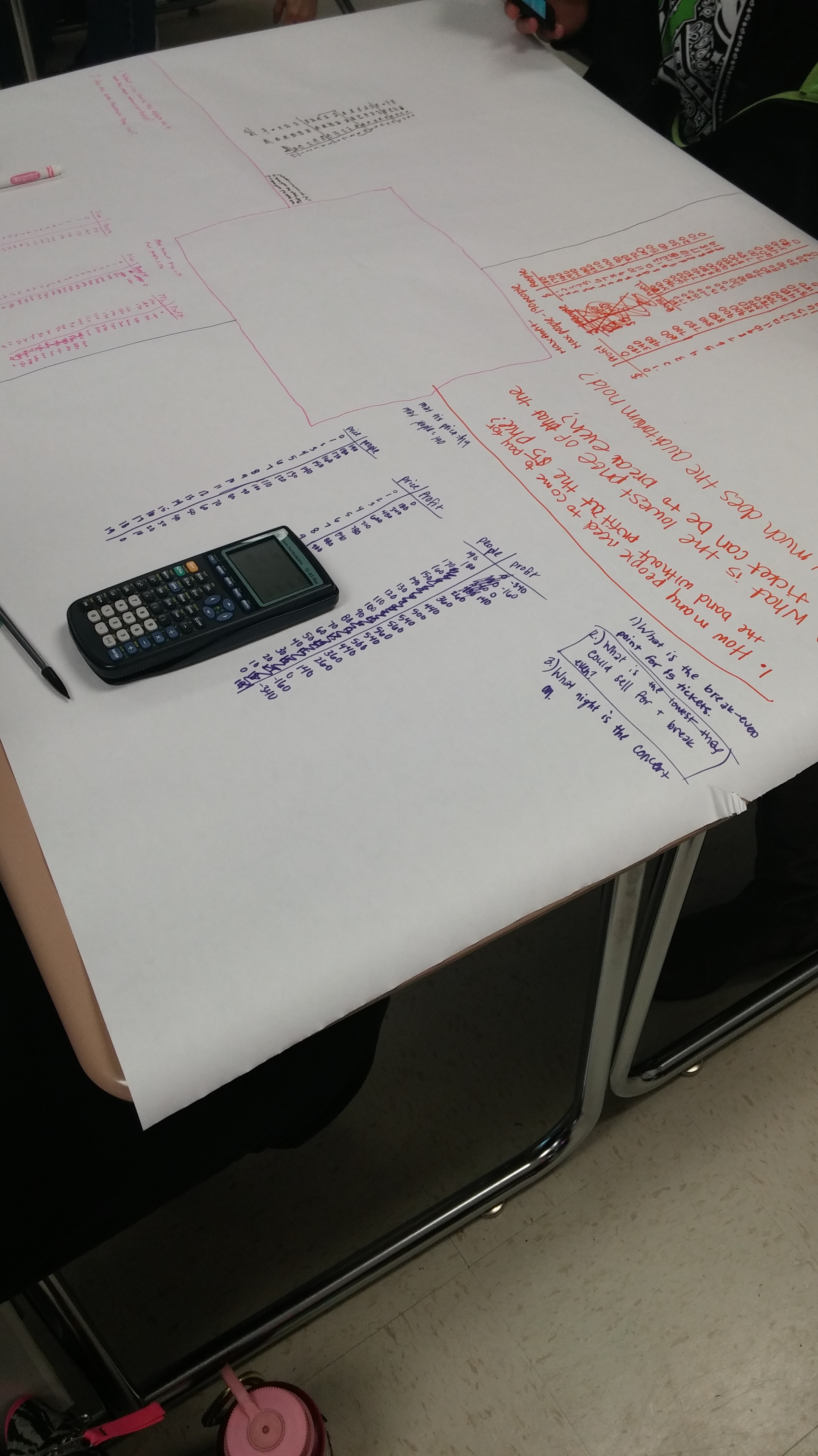
On Friday, I tried a simple version of this.  First, students were presented this scenario (taken from the Math Forum POW section):

The Student Council at Rahkenrole High School is planning a concert.  They’ve hired the Knox Mountain Boys, a popular local band, for $340.  A poll among the students has shown that if tickets cost $5, 140 people will come to the concert.  For every dollar the ticket price goes up, 10 fewer people will come, and for every dollar it goes down, 10 more people will come.  

I’ve been a huge fan of the Math Forum, long before I joined Twitter (and got to fangirl Max Ray at TMC14).  The reasons might not seem obvious from this scenario, but kids noticed right away that there was no question asked at the end.  What’s brilliant here is that there is literally an infinite number of questions that we could ask here.  Granted, some questions are more important than others, but I framed the task in a way that elicited what I needed.

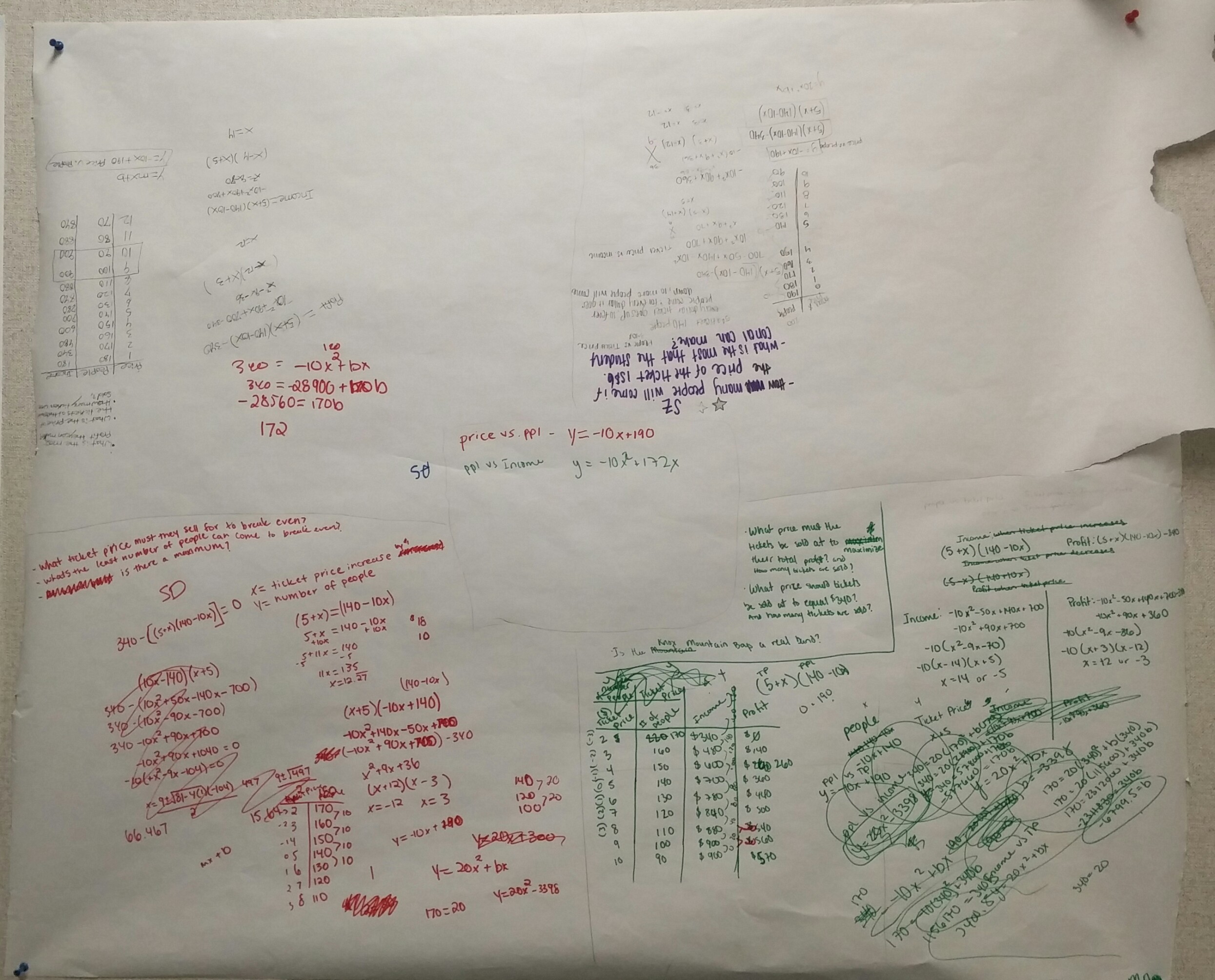
I handed out a big white piece of paper to each group of 4 and had them divide the paper up into sections.  This way each person in the group was both the recorder and the problem solver.   I asked them to write down 2 questions they think that I would ask about the scenario and one question (anything) that they would ask.  They identified their group’s most important question and put it up on the whiteboards on the wall.

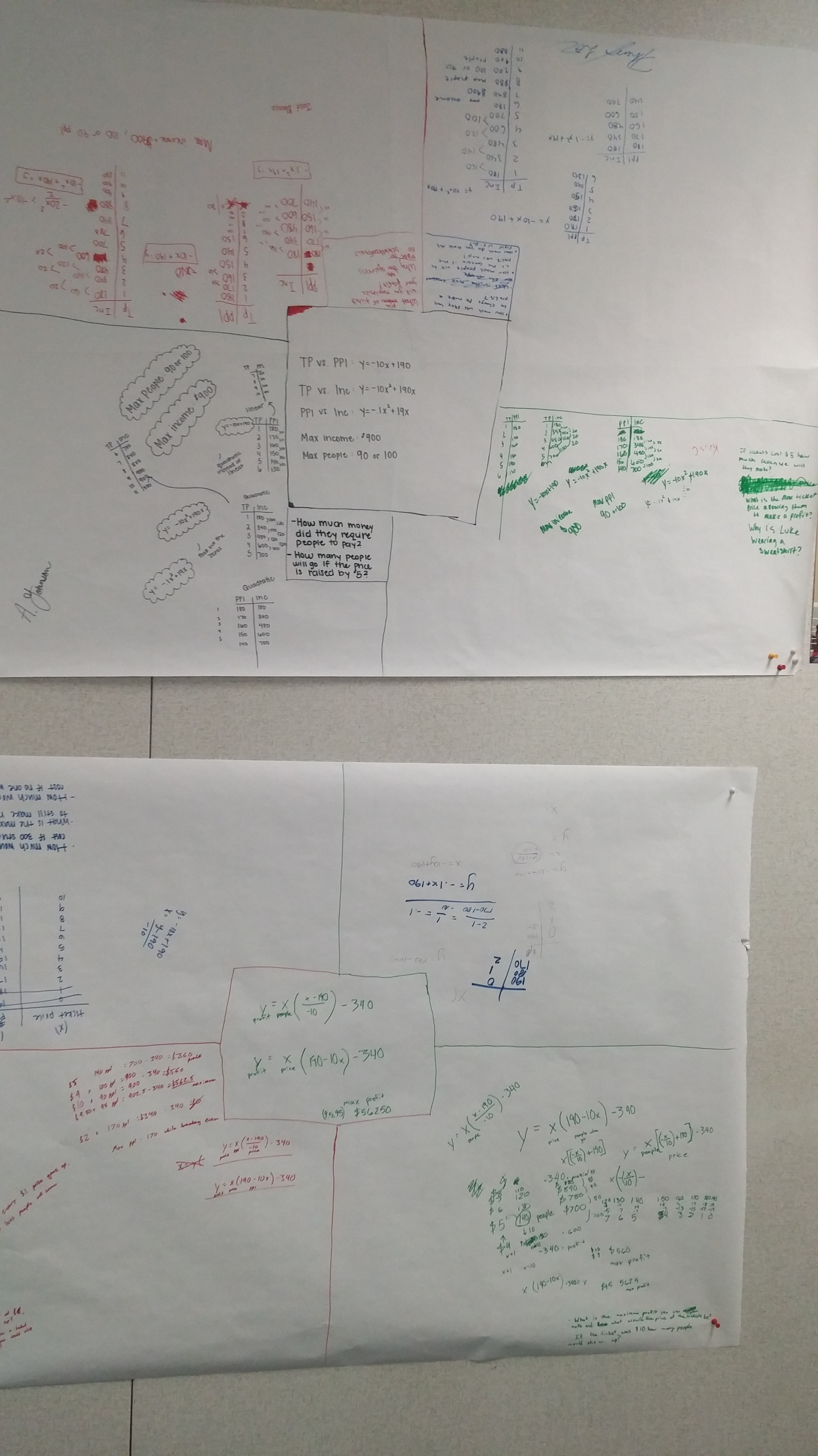
Low and Behold!  They READ MY MIND! They asked about maximizing profit, income, and people, and also requested modeling equations for each.  The excellence in this scenario (and the Math Forum in general) is that it can be applied to so many levels of math for so many reasons.  For example, most high school kids can make a table and figure out a reasonable answer for the maximization questions, and kids with more know-how can develop mathematical models.

Some great things happened:

  1. They knew they needed ONE set of answers in the center of their paper.  This meant they had to communicate the work in their section. The traditional group roles dissipated, and they all had equal stake in solving the problem.
  2. They solved the problem in so many different ways.  (Do you remember these types of questions from Algebra 1/2?  I’m sure they have a trendy textbook label that alludes me at the moment. But they are solved by making the variable “number of price increases. Interestingly, very few students solved it that way successfully.)
  3. They were messy. And I loved it.  In fact, I made the second class use markers exclusively so that they could not erase.
  4. They were uncomfortable leaving some of the questions unanswered.  When I didn’t label certain questions as “bonus” or “extension” they felt that all were necessary to be successful.  My goal was for them to collaborate with ownership in their individual contribution.  I may have gotten more joy out of this part than I should have 🙂

Here are some fun photos of their work:

0109151104-1 0109151149 0109151215


Hi. I’m Megan.

The time finally came for us to move the crib-turned-toddler-daybed out of my daughter’s room and clear the way for her new big girl bed.  While clearing out the menagerie of clutter that remained from under her bed, I came across a card that I must have given my daughter to play with when she was collecting “credit cards.”  It was my therapist’s business card, and on the back, as was typical when I was attending therapy, was a question for me to reflect on before my next session.  “What is Normal?

Growing up, I experienced more square-peg, round-hole situations than I care to recall.  Moving, switching from private to public school, changing swim teams to find the right fit kept “normal” seemingly out of reach for me.   A career change, divorce, and seven years of therapy later, at the age of 31, I realized that this “normal” that so many of us live in constant pursuit of does not really exist at all.

[Side note: If when you hear the word therapy, you think  “I don’t need to pay someone to listen to my problems.  I’ve got friends for that, I want to be the first to tell you you’re wrong. There’s a professionalism and unbiased skill that a therapist has when uncovering the root of an issue. Just like content experts don’t make the best teachers, friends don’t make the best therapists.]

I’ve struggled internally with how to write this blog post for a long time.  I wrestled with the idea of writing anonymously, but “unnamed” has never been my way about things.  My ultimate goal in this is that my experience, strength and hope can inspire, encourage, and support someone who is having a similar struggle.  I feel I can do that most effectively with a genuine story, rather than an incognito account.  So, without further introduction, I’m taking a deep breath, putting my big girl pants on, and opening up.


Hi.  I’m Megan.  I’m a mother, a wife, a vegan, a dog lover, a math teacher, and an alcoholic.  On March 31, 2012, I admitted my powerlessness over alcohol and this March will mark 3 straight years of sobriety for me.  I’ve attended AA meetings, in numerous cities, and the message is the same:  The addiction is merely a symptom to an underlying problem.

On August 29, 2010, I gave birth to a baby girl named Maria.  Her perfect eyes, toes, and full head of hair illuminated my world like I could not have imagined.  Being a mother was going to be the most rewarding, beautiful experience of my life, yet I felt the heavy burden as the life of this child was placed in my arms. Nothing short of divine intervention was going to come between me and protecting my child.  Nothing, of course, but the power of an addiction to alcohol, which no human force could ever remove.  I remember looking at Maria’s perfect blue eyes and stroking her soft baby skin, while slowly emptying the remaining contents of a bottle of Kettle One vodka I’d stashed under the sink.  Alcohol pulled me deeper and deeper into helplessness as it seduced me night after night.  That first sip after a hard day dealing with students sent a rush of relief throughout my body. But that relief was short lived when the need for more grew greater and greater.

Everyday, people are touched by the promises of Alcoholics Anonymous.  Every profession in the world has been affected by the disease of alcoholism.  But as a teacher, I have experienced the anxiety that comes with wondering if AA is truly anonymous. I hesitated so many times to walk through the welcoming doors and admit my powerlessness over a drug that held me down.  Fearful that inside those rooms I’d lock eyes with a parent, former student, or colleague who would divulge my secret that I struggled with alcohol.  As teachers, we desire control and order.  Trying to control my intake of alcohol was something out of my reach, yet the fear of being recognized as a teacher kept me from attending a meeting and seeking real help.

I still attend AA meetings and no longer fear running into school parents or former students.  In fact, I’ve become friends with a few that also attend meetings.  When I run into former students, I look for ways I can be helpful to them rather than shying away.    Along with therapy, I’ve learned to embrace my abnormality.   I’m a math and dog-loving, vegan, alcoholic.  I’ve been told not to open with that description, but that’s who I am at the core.  I don’t fit into many social circles naturally, but I’m fiercely committed to those I call friends.  Since I’ve put down my drink, my life has not stopped getting better.  And I’ve built a confidence in myself that there isn’t anything I want to accomplish that’s out of my reach.

There’s a lot of cliched “if I can do it, you can do it” rhetoric that follows stories like this, so I’m going to try to go a different route.  Social media does a lot of great things, but the glow of perfect Instagram photos and self-congratulatory Facebook statuses seems to tell us to put our best foot forward and discourage us from showing the hurt that lies underneath.  Many of us mourned when Robin Williams lost his battle with addiction by taking his own life, but how many of us reached out to the Williams’ in our timelines?  The face of addiction isn’t necessarily the homeless person on a bench with a bottle in a bag.  Because it’s also the teacher down the hall who holds it together during the day and falls apart at night.

I will be an alcoholic for the rest of my life, and my goal in posting this is to shed light on the deep rooted issues that even the most connected of connected educators hide.  If you struggle with addiction, please reach out.  Alcohol happened to be my drug of choice, but the many threads of addiction run together under common themes.  Please share this post far and wide, especially if you think it would help someone who is struggling with this destructive, life-threatening condition of addiction.

We open our hearts and souls to our children every year, but struggle with opening ourselves to help.  We support each other with twitter chats and lesson sharing, but I know that so many fellow educators struggle with similar issues that don’t translate well in 140 characters.  But we can’t heal a hurt we keep hidden underneath educational technology and growth mindset posters.  Let’s lift each other up in a way that helps us grow from the inside and helps us appreciate our own abnormalities as perfection.